
By Michele Schultz

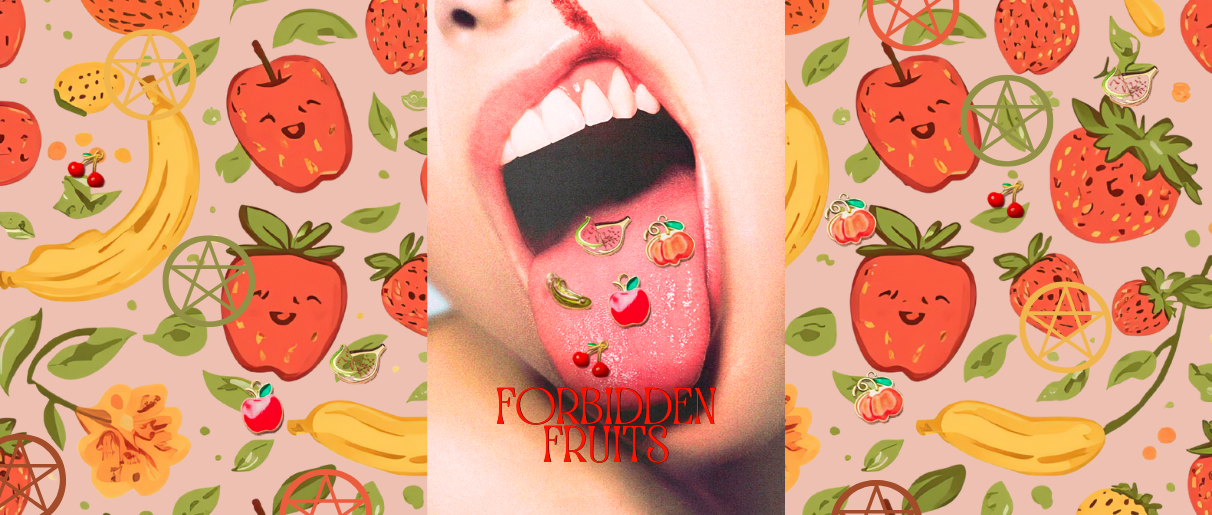
Whenever costumes appear onscreen demonstrate how fashion can escalate in co-writer-director Meredith Alloway’s and co-writer Lily Houghton’s fantasy horror Forbidden Fruits, produced by Diablo Cody, follows Mall retail employees after hours, secretly part of an underground coven. With the film already released in theaters, Forbidden Fruits costume designer Sarah Millman outlines the horror context behind the sartorial of the Fruits.
Forbidden Fruits costumes built an influence around the mall retail atmosphere that mirrors the “Fruit” aesthetic in the film, alongside a close collaboration between Millman, Alloway, the director, and production designer Kira Vernon, which was crucial for seamlessly integrating wardrobe with the mall retail environment and visual language of Forbidden Fruits.
With Millman confirmed to have established a working relationship with the actresses, particularly Lili Reinhart as Apple, involved exchanging numerous texts about costume ideas before filming. These discussions covered Apple’s initial look, the blue apple print knitwear, and sheer tights.
In Forbidden Fruits, the character-driven costuming uses clothing as both psychological armor and a storytelling tool. Notable examples include Apple’s leather coat, the horror-inspired Pickle’s (Emma Chamberlain) blue dress, and Fig’s (Alexandra Shipp) layered outfits. These styles reference both mainstream and niche fashion, drawing from mall retailers to vintage thrift shops, emphasizing a mix that results in bold, distinctive, maximalist pieces, while the approach highlights the role of clothing and fashion within a horror setting.
Retail, Color Palettes as Identity, Silhouettes in Mall / Giallo Context, Horror References
Each “fruit” character identifies a specific mass mainstream retailer, emphasizing that Apple cannot be contained by a single store, instead “borrowing” designer pieces.
“I would say that they really are, can’t be contained by one store, but if they had to Fig, I would say is the most likely to be shopping at a Hot Topic— Pumpkin (Lola Tung). We were sponsored by American Eagle for the film, so she’s a split between Reformation and American Eagle. Cherry’s (Victoria Pedretti) like a Siren girl— Apple, would probably, ooh, that’s a tricky one, I feel like she’s just shoplifting from wherever she sees the best designer pieces, and she can’t be contained by just one,” Millman said on mapping the “Fruits” retail aesthetics and mirror the Fruits’ high fashion mallcore. “We did use a lot of brands, but what makes them unique is that we mixed in a lot of thrifted vintage, more like Salvation Army or Goodwill.”
Although fruits work in a mall retail store, a theme and trend that is explicit in a “mallcore” culture is Pickle’s blue dress is a deliberate link to a horror reference chosen to evoke a “girl child” vulnerability and mental health decline, as Millman said Chamberlain suggests about “making it shorter” to echo scandalously short 1960s hemlines.
“The dress is actually Free People and reminiscent of Rosemary’s Baby! It was a full cycle Easter Egg when Emma Chamberlain came in for her fitting. I knew that it was going to hang off of her frame, thereby sort of heightening this girl child, but also vulnerability that she’s kind of fallen from grace,” Millman said on Pickle’s dress tying mental health, horror into a contemporary mall brand, and Pickle’s psychological state. “I wanted her mental health journey to show up in this garment kind of hanging off her frame. Scandalously short, big, shapeless sort of shift, it further heightens this little girlness or vulnerability.”
Each fruit has a distinct color palette tied to personality and function within the coven: Apple in strong blacks and reds with minimal pattern; Cherry in magentas, pastels, pinks, and Victorian‑inspired lingerie as outerwear; Fig in black, burgundy, wine, and dark grays with fortress‑like layering; Pumpkin shifting across palettes as she tries on identities and then returns to a more tomboy/sporty energy.
“We knew Meredith, our director, and Director of Photography Kareem, were very inspired by Giallo films and that color palette,” Millman said on color palettes, Giallo influence, and character differentiation. “We knew that we had to work within that little bit but also pop out of it.”

Visual Motifs: Recurring Pieces, Boots as Claustrophobic, Dangerous
The recurring motifs include Pumpkin’s heart‑shaped necklace as her “hero necklace” that Millman said encapsulates Pumpkin’s backstory and contrasts with Apple. Furthermore, specifically Cherry’s stiletto lace‑up boots were carefully chosen for the visual element described as the result of an extensive search for fully lace‑up, zipper‑less boots with an alarmingly thin, precarious heel.
“So her stiletto, lace-up boots, that was, again a big search— we tried and looked at many boots that had to be actual lace-up with no zipper on the side, in which, in this age, is really impossible,” Millman said, detailing the design requirements for Cherry’s boots and the thematic role. “But they had to feel claustrophobic once done up that there was no getting out, and they had to feel dangerous while the heel had to feel kind of alarmingly thin and precarious.”
Layering as Fortress and Camouflage
Fig’s palette and layering are framed as a “literal fortress,” using layers to manage vulnerability and camouflage as a “mall goth” within the coven, while keeping “one foot out the door” and not using her body the same way as the other Fruits.
“Her costumes are kind of like a literal fortress— she’s layered up, she has a lot of layers, and she used the layers to manage her vulnerability,” Millman said on Fig’s fortress-like costuming. “Kind of camouflage as a mall goth into the coven.”
Clothing as Armor and Character Signal
Clothing is framed as armor in horror in relation to Apple’s long black leather coat with a shearling collar, a custom piece by New York-based designer Dylan Mekhi, which both attracts and repels, functioning as visual armor and a signal of her “badass” persona. It’s chosen for its boldness and length against very short shorts, and for how it visually contrasts with the casual mall setting and the man in a puffer vest.
“It begins her sartorial journey of like ‘Come here, come here, go away’,” Millman said, emphasizing Apple’s style as seductive armor. “It is something that’s meant to draw in and then repel.”

Part of the Cherry Picks critic community and contribute to digital publications (e.g., Drinks, Food, Life) and FanSided’s entertainment and lifestyle verticals like Culturess, TripSided, and 1428 Elm. With a background in retail merchandising, fashion marketing, and costume design bring a aesthetic storytelling perspective on horror.
When not writing, work in field operations for an entertainment provider specialize on theater out-of-home (OOH) marketing impact measurement.
Leave a Reply