
By Jennifer Smith

In the horror genre, rituals and superstitions serve as tools to explore themes of tradition, control, manipulation, and morality. Whether these tools are used by power-hungry characters to manipulate and control others or by well-meaning characters desperate to breach the gap between life and death, the consequences are often disastrous for all involved.
Tradition plays a role in establishing societal or familial rituals and superstitions. The phrase, “We’ve always done it this way,” comes to mind. Those who make such statements fear that upsetting the status quo will lead to the downfall of society. The sinister side of tradition and its connections to ritual and superstition can be seen in movies such as Robin Hardy’s The Wicker Man (1973) and Robert Eggers’ The VVitch (2015). In The Wicker Man, Lord Summerisle (Christopher Lee) convinces the island’s residents that the ritual of human sacrifice is necessary in order for the crops to grow and flourish. Playing on their superstitious beliefs, he exerts control over the entire small island community, which leads to their gleeful celebration as Sergeant Howie (Edward Woodward) is burned alive inside the titular wicker man. Throughout the film, the pagan practices of the islanders is juxtaposed with the Christian rituals performed by Sergeant Howie. While on the island, Sergeant Howie judges and condemns the islanders’ traditions and beliefs, hence believing himself to be superior to and holier than Summerisle’s residents. Although I clearly do not condone human sacrifice, Sergeant Howie fails to see the hypocrisy and bigotry in his condemnation of rituals and superstitious beliefs that differ from his own. He expects the islanders to adhere to his traditions and belief system. In doing so, he plays right into their hands, becoming a sacrificial virgin to ensure the continued prosperity of Summerisle.
Similarly, The VVitch’s patriarch William (Ralph Ineson) believes his way of practicing Christianity is holier than his Puritan community’s practice. His superiority complex reveals his deep pride, which leads to his family’s removal from the community and their isolation in the wilderness. The family’s isolation, combined with their superstitions about the existence of the devil and evil witches who lurk in the woods, leaves them vulnerable to attack. By the end of the film, teenage Thomasin (Anya Taylor-Joy) is the only family member still living. When given the opportunity to reject the traditions of the Puritan community, Thomasin sheds her shift and embraces the opportunity to “live deliciously.” By signing Black Phillip/the devil’s book, she takes the first step in the ritual of becoming a witch. Thomasin, having been oppressed by patriarchal culture and falsely accused by her family of practicing witchcraft, exercises her agency by embodying what the patriarchy fears the most – an empowered woman. Yet, one question remains. Is Thomasin truly free, or has she merely exchanged one form of patriarchal subservience for another? And, at what cost?

As evidenced by The VVitch, superstitions, and rituals in horror movies and series are often used to explore themes of control and manipulation. Looking back at the history of film and television, these themes are depicted in films such as Roman Polanski’s Rosemary’s Baby (1968), which focuses on a young woman who is impregnated by the devil without her consent. While Rosemary’s (Mia Farrow) neighbors – who happen to be in a devil-worshiping cult – target her for this role, her husband Guy (John Cassavetes) goes along with it in exchange for promised success in his acting career, thus revealing how the patriarchy sacrifices women in order to maintain power and control. Throughout the film, ritualistic scenes and superstitions are interspersed with Rosemary’s realistic horror as her bodily autonomy is continually stripped away. As today’s women still fight for agency and bodily autonomy, writers and directors continue to create films and series that illustrate women’s struggles. Both Akasha Stevenson’s The First Omen (2024) and Michael Mohan’s Immaculate (2024) examine the ways in which patriarchal religious institutions use theology, ritual, and superstition to oppress and subjugate women. The women in these films – specifically nuns (The First Omen’s Margaret portrayed by Nell Tiger Free and Immaculate’s Cecilia portrayed by Sydney Sweeney) – are led to believe that their bodies and souls belong to a higher power. As a result, they feel indebted to this higher power and, by proxy, to the leaders of these patriarchal institutions. In each of these films, religious authorities use women’s devotion to the church to manipulate, control, and – eventually – assault and impregnate them. In creator Bruce Miller’s television series The Handmaid’s Tale (2017-2025), the United States government has been overthrown by a patriarchal and totalitarian theocracy known as The Republic of Gilead. Using declining reproductive rates as a means to instigate fear and compliance, Gilead places fertile women in the homes of Commanders and their supposedly infertile wives. Each month, these fertile women – known as handmaids – are raped by the commanders; however, Gilead attempts to sanitize the sexual assault of handmaids by referring to the nonconsensual acts as rituals, or “ceremonies.” Most of the series focuses on handmaid Offred/June (Elisabeth Moss) as she seeks to navigate and eventually dismantle Gilead’s totalitarian regime. As the final season of The Handmaid’s Tale is set to air in 2025, much of the current United States political climate feels eerily similar to the events of the first season. I expect to see a rise in media that focuses on the ways in which superstitions, rituals, and traditions are used by corrupt authorities to control and manipulate the masses and strip women and other minority groups of their agency and bodily autonomy.

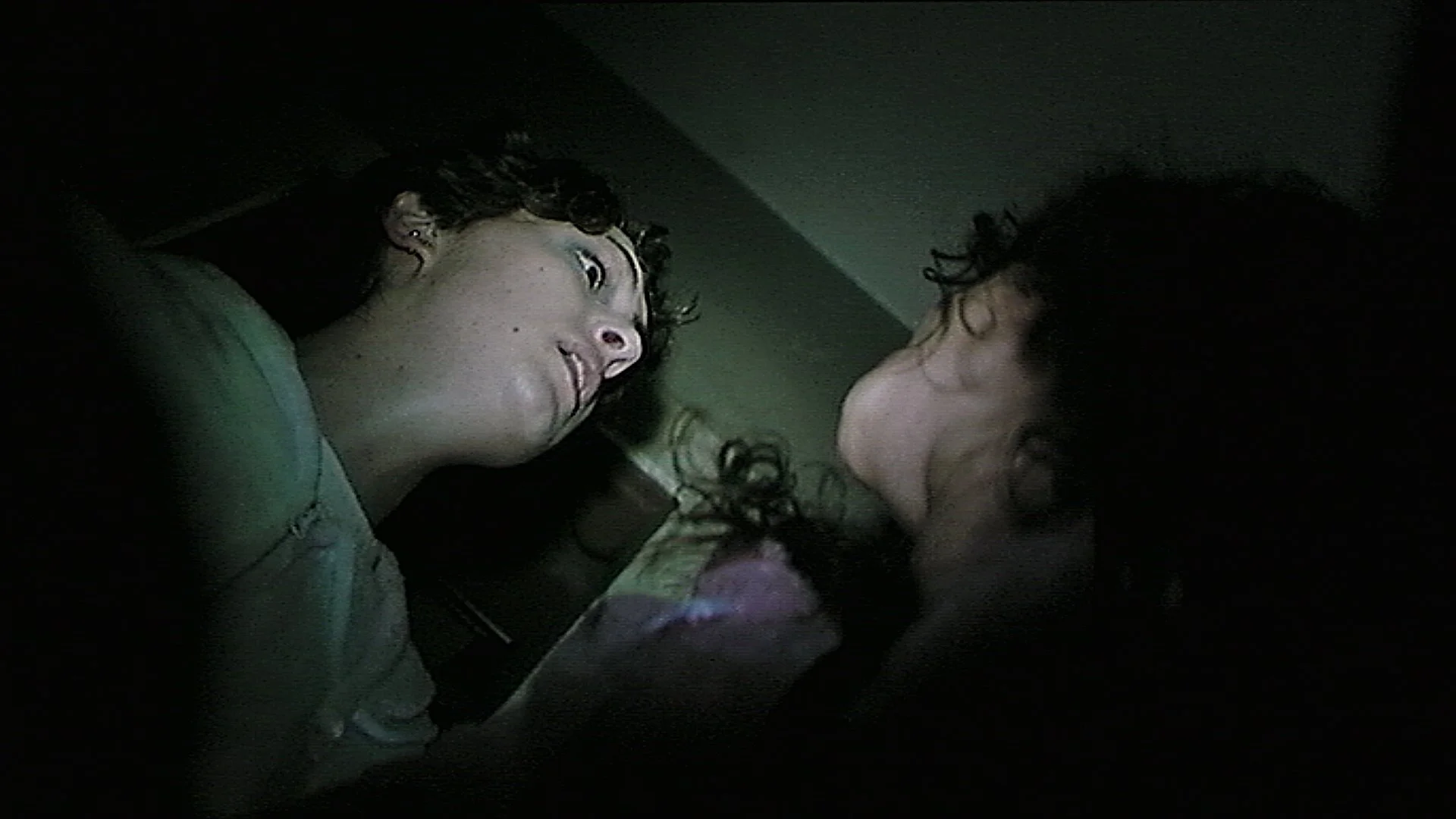
Other films, such as Mary Lambert’s Pet Sematary (1989), David Keating’s Wake Wood (2009), Ari Aster’s Hereditary (2018), and Danny and Michael Philippou’s Talk to Me (2022), use superstitions and rituals as a framework to analyze morality and ethics. Each of these films features grieving characters who relinquish control of their lives and the lives of others to sinister powers they do not fully understand. Because they are desperate to connect with deceased loved ones, the characters in these films allow superstition to override reason. Transgressing the boundaries between the living and the dead, they perform rituals that open themselves and others to evil, thereby leading to tragic consequences. While their intentions may be good, the end result of their actions reveals the inherent danger of trying to change fate. In Pet Sematary, grieving father Louis Creed (Dale Midkiff), despite numerous warnings that “Sometimes, dead is better,” exhumes his toddler’s (Miko Hughes) dead body to rebury him in an ancient burial ground known to restore the dead to life. Yet, as Louis and his family learn, there are fates worse than death. Similarly, in the lesser-known film Wake Wood (2009), grieving parents (Eva Birthistle and Aidan Gillen) participate in a local ritual to bring their deceased daughter (Ella Connolly) back to life. In this case, the restored person is only allowed to live again for a set amount of time. Yet, although they agreed to this stipulation, the parents refused to let their daughter go when the time came. As might be predicted, this refusal leads to fatal consequences for many in the community. Hereditary is another film that explores how far grieving parents will go to connect with a deceased child. After her daughter Charlie (Milly Shapiro) is killed in a horrific accident, Annie (Toni Collette) is desperate to reunite with her. Entrenched in grief, Annie falls prey to a sinister plot that was put into motion long ago by her deceased mother. Annie’s mother was part of a cult that worships Paimon, one of the kings of hell. Annie performs a ritual she believes will allow her to commune with the deceased Charlie; however, unbeknownst to Annie, she has instead opened herself and her family to possession by Paimon. Once this door is opened, the horrific climax of this film leaves the family and viewers decimated. Subverting the grieving parent trope, the film Talk to Me instead focuses on a daughter Mia (portrayed by Sophie Wilde) who is grieving the loss of her mother. Offering a fresh take on the concept of possession, Talk to Me replaces the overused Ouija board with an embalmed hand to tell the story of teenage Mia and her friends. When an embalmed hand is found to be a channel for spirits to enter the living, Mia and her friends take turns holding the hand and commanding the spirits to “talk” to them. Additionally, one can deepen their connection to the spirits by inviting the spirits to enter into their bodies. However, there is a time limit for how long one can safely be connected to the spirits during this ritual. When Mia ignores the time restraint, she brings about fatal consequences for herself, her family, and her friends. When viewing films such as these, audiences are made to grapple with the question of how much they would be willing to sacrifice or risk to reconnect with a lost family member or friend.
The horror genre uses rituals and superstitions in multifaceted ways to explore the human psyche. Rituals and superstitions are used to explore themes of control, corruption, power, morality, and the unknown, leaving characters and audiences to grapple with the dangers of blind faith and tradition and examine their own tendencies to seek meaning and control during uncertain times.


Jennifer Smith holds a MA in English from SNHU. She specializies in feminist theory and the horror genre. She has presented her work at the PCA/ACA National Conference and currently teaches online courses in literature, mythology, folklore, and poetry. She is often found with a book in one hand and a cup of coffee in the other.



Leave a Reply to Jennifer SmithCancel reply