By Stan Wright

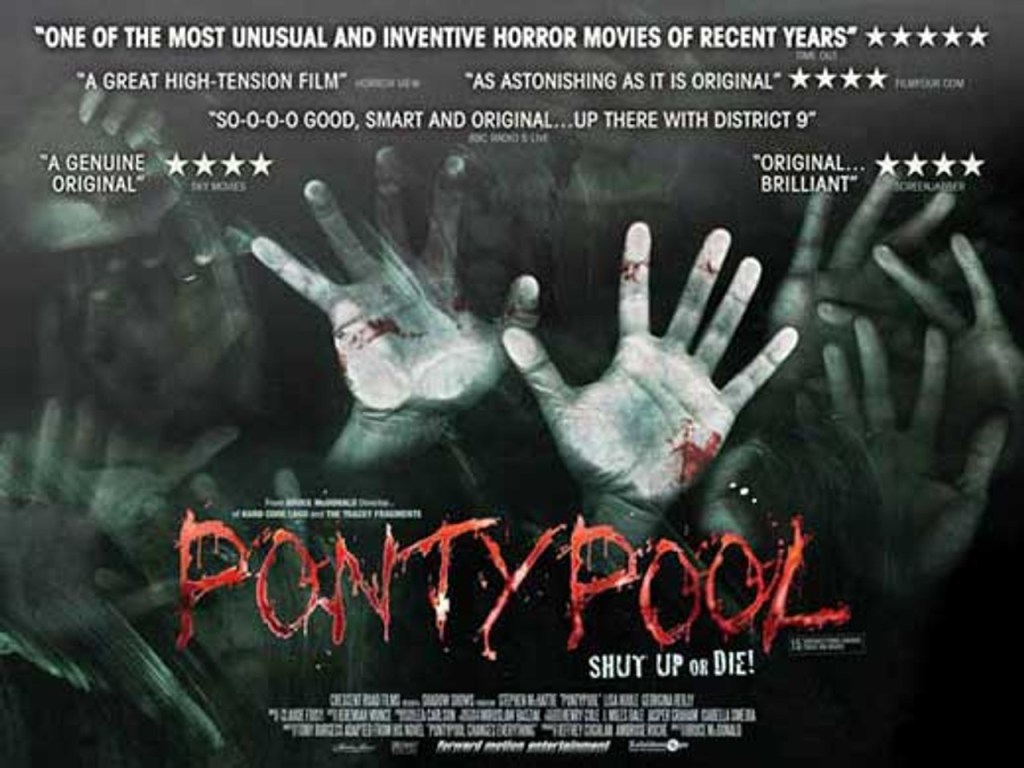
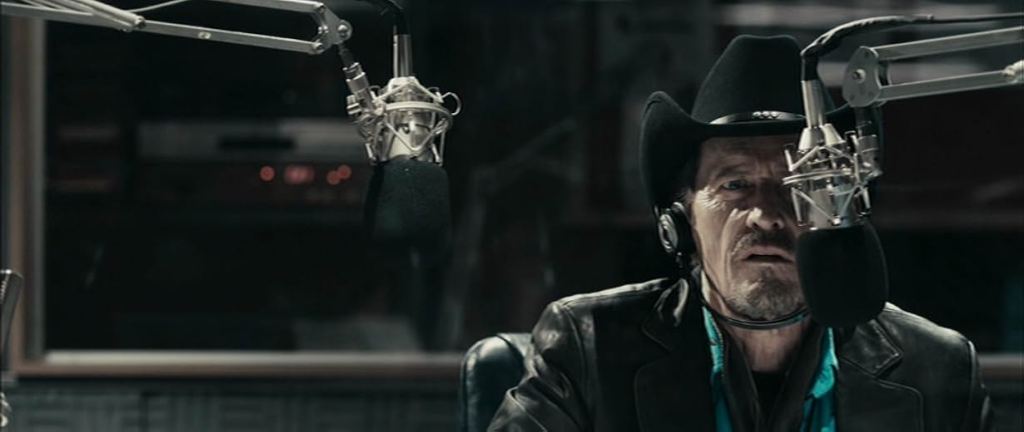
The 2008 film Pontypool, directed by Bruce McDonald, creates a suffocating atmosphere through its claustrophobic setting and its depiction of media isolation. Set almost entirely within a small-town radio station during a snowstorm, the film uses physical and environmental constraints to heighten tension and explore the fragility of human connection and understanding in moments of crisis. The interplay of claustrophobia and media isolation serves as a foundation for the film’s commentary on how we consume and transmit information during catastrophic events. The combination of physical isolation and the weight of their media responsibilities takes a toll on the characters, particularly Grant Mazzy (Stephen McHattie), the station’s outspoken DJ. As the situation deteriorates, Mazzy’s performative bravado gives way to uncertainty and desperation. His isolation as a media figure—someone who speaks to an unseen audience without direct interaction—is amplified by the crisis, as he struggles to navigate the moral implications of his role in disseminating information. The snowstorm and the station’s confinement also strip the characters of external distractions, forcing them to confront the horror directly and reckon with their own limitations. In this way, isolation acts as a crucible, revealing both the characters’ vulnerabilities and their capacity for resilience in the face of an incomprehensible threat.
At its core, Pontypool can be seen as a subversion of the zombie genre. While it features many of the hallmarks of a traditional zombie film—contagion, societal breakdown, and the struggle for survival—it replaces the typical visual spectacle of shambling corpses with an abstract, cerebral threat. The infection in Pontypool is not transmitted through bites or physical contact but through language. Certain English words become “infected,” triggering uncontrollable and violent behavior in those who understand them. This unique premise re- frames the concept of contagion, turning communication—humanity’s most essential tool for connection—into a deadly weapon. The film’s exploration of linguistic infection taps into deep-seated fears about miscommunication and the loss of meaning in language. The idea that understanding a single word can unravel one’s mind is both surreal and terrifying, highlighting the fragility of our shared systems of communication. Unlike traditional zombies, who are often portrayed as mindless predators, the infected in Pontypool are victims of their own comprehension, making the threat feel more intimate and tragic.
Grant Mazzy, the central character in Pontypool, begins the film as a cynical and confrontational radio DJ. His on-air persona is that of a provocateur, someone who enjoys challenging conventional narratives and stirring controversy. Mazzy’s initial worldview is marked by skepticism and a sense of detachment from the community he serves. This is reflected in his brash, theatrical approach to broadcasting, which contrasts sharply with the gravity of the crisis that unfolds. As the events of the film progress, Mazzy’s perspective undergoes a profound transformation. Confronted with the incomprehensible horror of the linguistic infection, he is forced to reckon with the power of words—both as tools for connection and as weapons of destruction. His usual bravado gives way to a more introspective and compassionate approach, particularly as he realizes the role he and the station play in either exacerbating or mitigating the crisis. By the end of the film, Mazzy’s evolution is evident in his willingness to experiment with language to combat the infection, highlighting his shift from skepticism to action and responsibility.

The snowstorm in Pontypool is not merely a backdrop; it is an active force in the story that compounds the characters’ sense of entrapment. By cutting off the outside world, the storm amplifies the physical isolation of the radio station and the psychological isolation of the characters. The storm’s presence is felt in subtle ways—the ominous descriptions of poor visibility and impassable roads contribute to a sense of helplessness. The station becomes a microcosm, an insulated space where the characters must confront the unfolding crisis without the option of escape or external assistance. Snowstorms often symbolize silence and stasis, and in Pontypool, this symbolism underscores the film’s focus on language. The storm’s muting effect contrasts sharply with the verbal chaos unfolding within the station, as language becomes corrupted and weaponized. The characters are trapped not only by the physical environment but also by the breakdown of the very tool they rely on to understand and communicate: words.
The radio station serves as a critical node for information but also illustrates the limitations and dangers of media during a crisis. On one hand, the station is a lifeline, allowing the characters to gather fragmented accounts of the infection from outside sources. On the other hand, the reliance on secondhand information—caller reports, garbled transmissions, and eyewitness accounts—creates a sense of ambiguity and mistrust. The characters are inundated with conflicting narratives, unable to determine what is real or how to act. This mirrors the real-world challenges of media in times of crisis, where misinformation and panic often spread more quickly than the facts. The radio’s traditional role as a unifying force in small communities is subverted in Pontypool. Instead of connecting people, language becomes a source of division and destruction. The station’s broadcasts inadvertently become a medium for the spread of the infection, turning their efforts to inform and help the public into a potential vector for harm. This chilling irony reinforces the film’s themes of miscommunication and the fragility of understanding.

Pontypool masterfully uses the snowstorm and the radio station setting to create a sense of claustrophobia and media isolation. These elements are not mere set dressing but integral components of the film’s exploration of communication, miscommunication, and the fragility of human connection. The physical and psychological constraints imposed by the environment heighten the tension and underscore the film’s central themes, making Pontypool a chilling and thought-provoking meditation on the power and peril of language in times of crisis.

 NightTide Magazine
Leave a comment