
By Paul Wooldridge

Released seven years after Dawn of the Dead (1978), Day of the Dead (1985) completed writer and director George A Romero’s groundbreaking “Dead” trilogy, and secured the walking dead, or ghouls as they’re more often referred (not zombies, or infected or any other sprinting rabid hordes), an irrevocable place in modern culture.
Beginning in 1968 Romero utilised the reanimated, recently deceased, to lay siege to modern anxieties. In Night of the Living Dead he focussed, firstly, on race and the fear of communism then, a decade later, in Dawn of the Dead, concerns with consumerism and lawless biker gangs were played out against the best post-apocalyptic use of a shopping mall ever captured on celluloid. In Day of the Dead, Romero finally took on the more universal themes of military and scientific endeavours, simplistic and intellectual conflict, along with the abuse of what dwindling power remains while society finally crumbles.
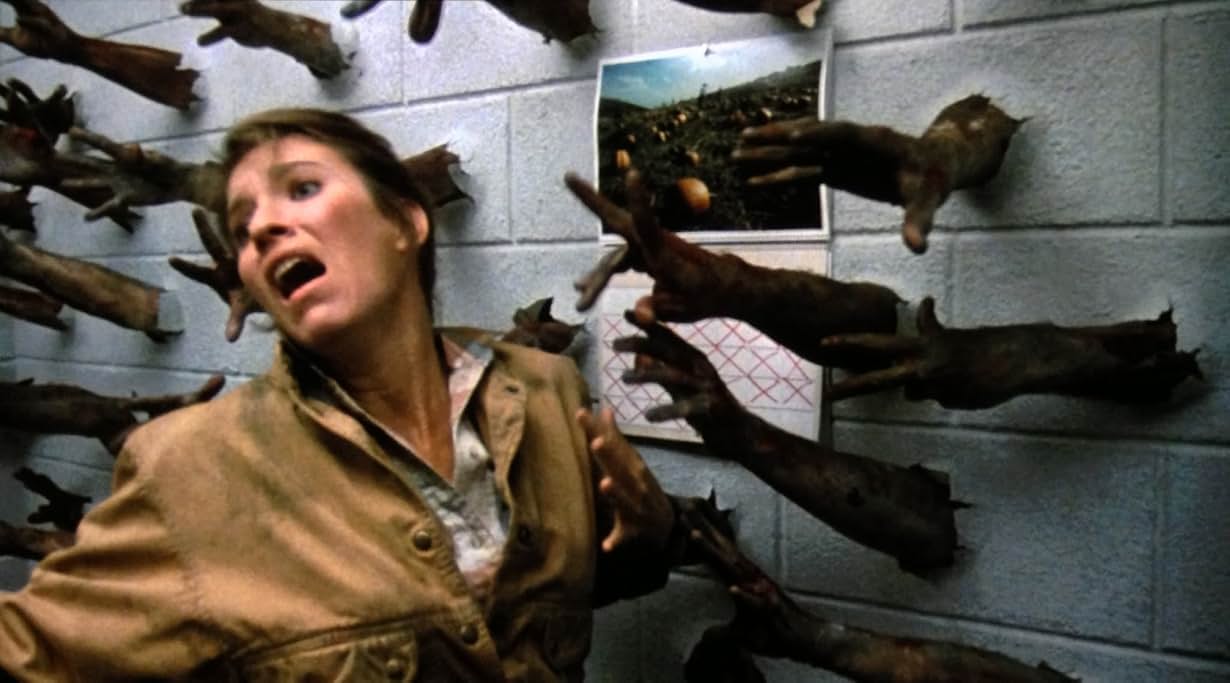
Noted as being Romero’s favourite, but lowest grossing of the trilogy, Day of the Dead (1985) begins with an iconic dream sequence and jump scare that sees the main character, and the film’s only woman, tormented, at first, by isolation, then by a host of rotting, grasping hands. The film’s opening immediately lays out the major sources of fear for the main protagonist, Dr Sarah Brown, played brilliantly by Lori Cardille.

Sarah is a great addition to the canon of 80’s female heroines. She is both a tough, capable and complex character, as inspiring as Sigourney Weaver’s Ellen Ripley in Alien (1978), but here Cardille displays a wider range of emotions portraying, alongside self assured confidence, a strained vulnerability, particularly when dealing with her increasingly broken love interest, Miguel, played by Anthony Dileo Jr.
Following the initial dream sequence, the film wastes no time in setting the hauntingly desolate scene, with the film’s most likeable quartet paying a flying visit to a coastal Florida town in search of survivors. Not only do they fail to find any signs of life, but the hordes of still shambling, increasingly rotten, undead come out in force, shuffling among the ruins which nature has visibly overwhelmed.
These desolate, neglected views of the outside world are accompanied by Modern Man and John Harrison’s wonderfully ‘80s synth score, which has became synonymous with Romero’s darkly satirical undead world.
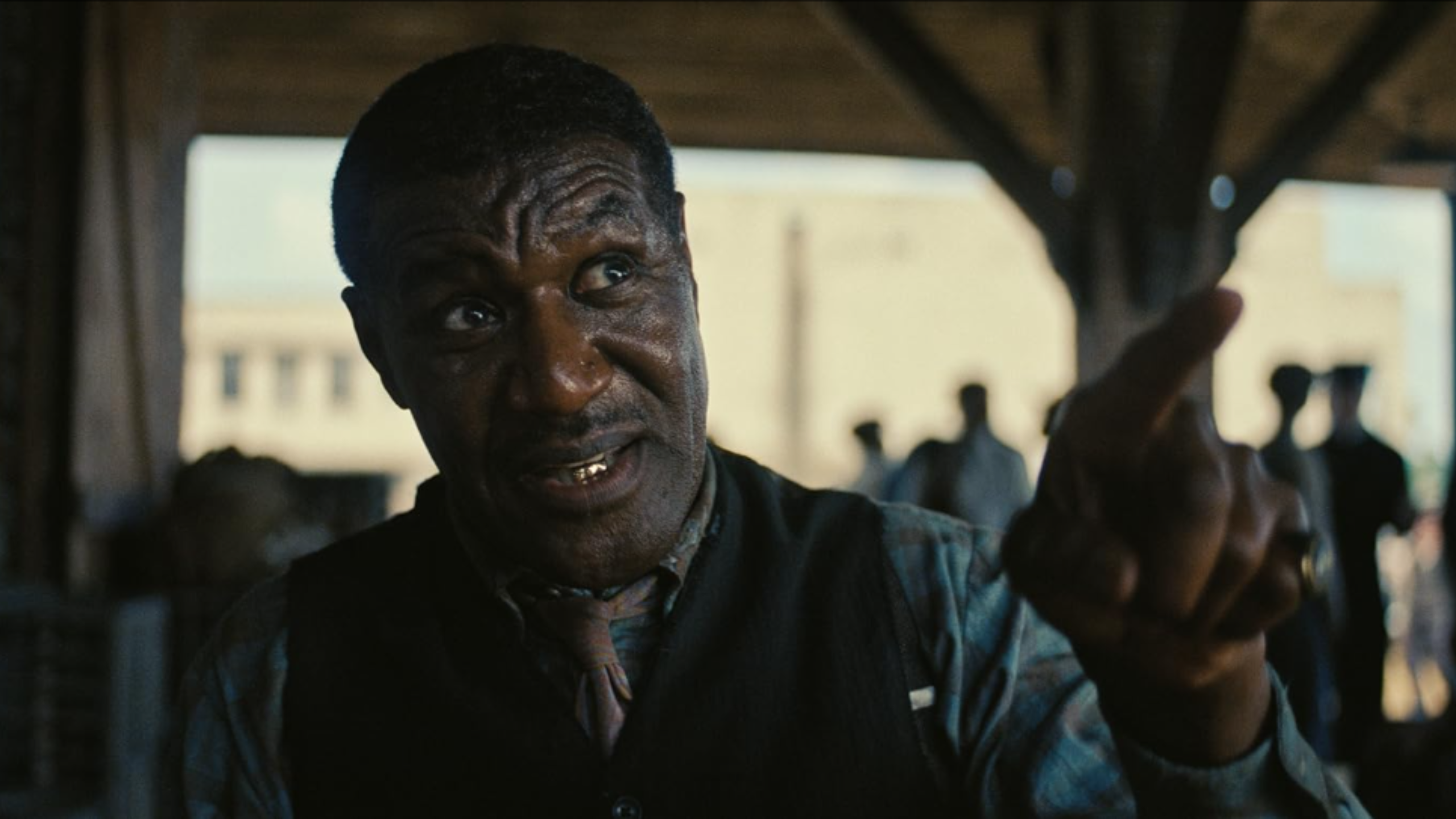
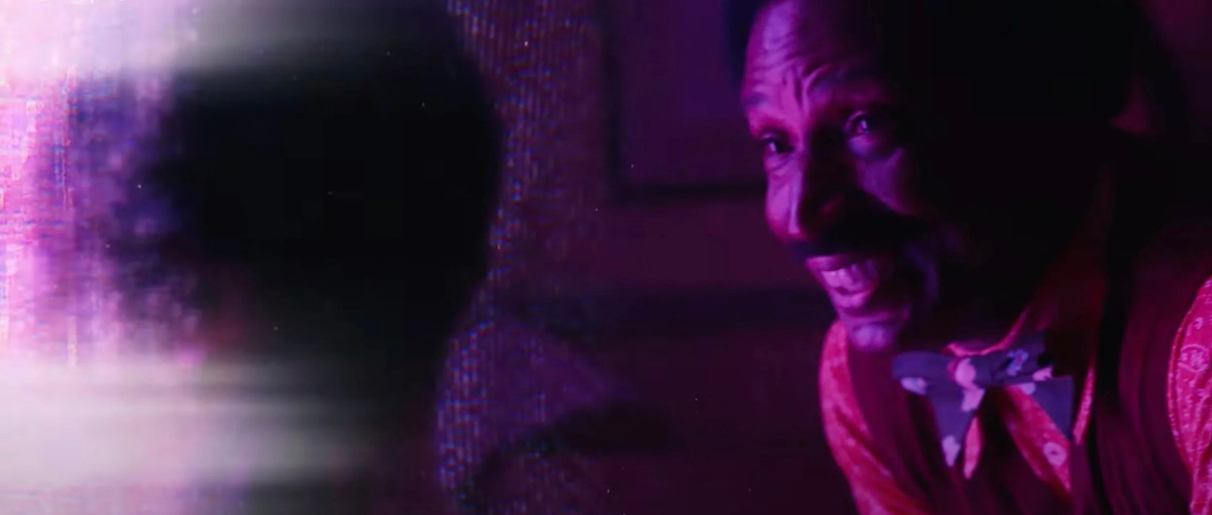
Within the helicopter Sarah is accompanied, not only by her wrung out boyfriend, Miguel, but by a couple of other, unsubtle racial stereotypes; the heavy drinking Irish Bill McDermont, played affably by Jarlath Conway, and the philosophical, and fantastically West Indian accented, John, played by Terry Alexander. Not only is this foursome the group for which the audience vie, but they offer the most level headed, stabilising influence in the rapidly failing microcosm of society to which we are later introduced.
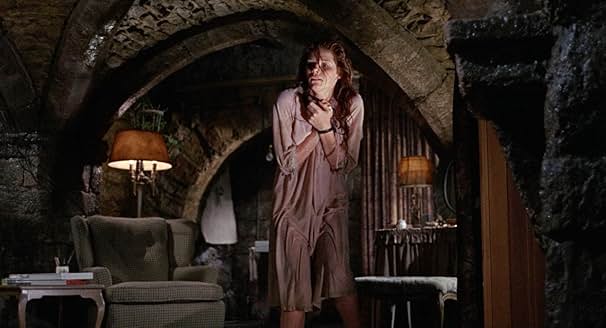
Following the initial helicopter search, Day of the Dead takes us into the empty stone tomb where the rest of film plays out, and the very real, very near, and all too human, threats exist. There is far more focus on the pressurised drama between the last vestige of humanity, than the physical battling of the undead in this particular instalment.

The factions that form within the subterranean compound are far more subtle than just the undead and the living, but the main contingents gleefully explore the extremes of their stereotypes. The parts are certainly played over-the-top, but are intended to be so, in order to better express the intensity of the situation in which they all have found themselves. The knuckle dragging military play up their obnoxious red-neck racism, sexism and a constant level of threat, lead by the increasing lunacy of Captain Rhodes, played by Joe Pilato. Rhodes relies upon violence to maintain a grip on power to better control the situation, which he can only barely comprehend. Initially showing concern for his men, the film’s most outright villain reveals himself to be a coward, as such bullies always tend to be. The intelligent, calmer and more unflappable group of scientists are lead by the well spoken but bumbling Dr Logan, played by Richard Liberty, as aloof and increasingly detached from the threat they all face. Nicknamed Frankenstein, Dr Logan is a great caricature of the insane liberal elites which the uneducated military cannot hope to understand and subsequently rail against.
The film not only successfully causes the viewer to switch allegiances between both factions, as the depth of their inhumane actions are revealed, but Romero manages to portray the undead as sympathetic, and an unexpected recipient of the audience’s pity.
The captured and partly domesticated ghoul, Bubb, is played by Sherman Howard, who makes the docile flesh eater almost adorable, while Dr Logan attempts to access what remains of his decomposing memory. It could be argued that Bubb is in fact the film’s real hero, as he tasked with avenging the death of his avuncular tutor, and is perhaps the most memorable of the entire cast of characters.


The gore, which is of the highest quality of all the Dead trilogy, is liberally spread throughout proceedings, placed within a laboratory setting, as opposed to on display when dispatching ghouls. That said, the creative kills and gun play, that fans of the genre seek, are still present but are saved for the film’s climactic final third.
In regards to the film’s splatter effects, Romero accepted a halving of his budget, to £3.5 million, in order to obtain an R rating in his attempt to create the most brutal gore possible for television. Special effects legend, Tom Savini, returned to cook up some of the most literally gut wrenching effects ever seen. The demise of Captain Rhodes saw undead extras vomiting, and Pilato himself required his nostrils to be blocked and only managed one take of his characters disembowelling. The pig intestines, used to great effect, were in fact rotting, due to the onset refrigerator having broken the night before filming. Make up was added to by a young Greg Nicotero, who’s career would go on to include work on The Walking Dead (2010-2022), Sin City (2005) and Fallout (2024).
As with all of Romero’s Dead trilogy, it wasn’t simply the levels of gore, or the fantastic make up effects, that made all three visits to his undead apocalypse such a truly terrifying and iconic experience, it was the bleak, realistic, and nihilistic vision of human beings, riddled with weakness, bigotry and fear, that bring about their own demise. It’s the slow, inevitable extinction level threat that undermines our species’s ability to find solace in the usual comfort blankets of religion, art, philosophy, industry and community. Plus getting eaten alive by the undead is always route one terrifying!


Paul Wooldridge is a Black Country based, horror loving, print maker, writer and podcast host. You can listen to him discuss the best horror, that streaming services can offer, on The Yammityville Horror Pod (Spotify and Apple). You can also buy his hand carved and hand printed horror inspired art on Etsy, @PWPrintStudio. He’s also on insta @pwprintstudio and @yammityvillehorror, and bluesky.
Leave a Reply