
By Andrew Pope

Return To Silent Hill (2026) Dir: Christophe Gans

When a man receives a mysterious letter from his lost love, he is drawn to Silent Hill, a once familiar town now consumed by darkness.
Gamers among you may have been quietly anticipating Return to Silent Hill, which has belatedly slipped into cinemas in the cold, unlovely depths of January. Bad news. This is the first big horror stinker of the year, a film so misjudged it feels less like a theatrical release than a warning to the curious of the perils of videogame adaptation.
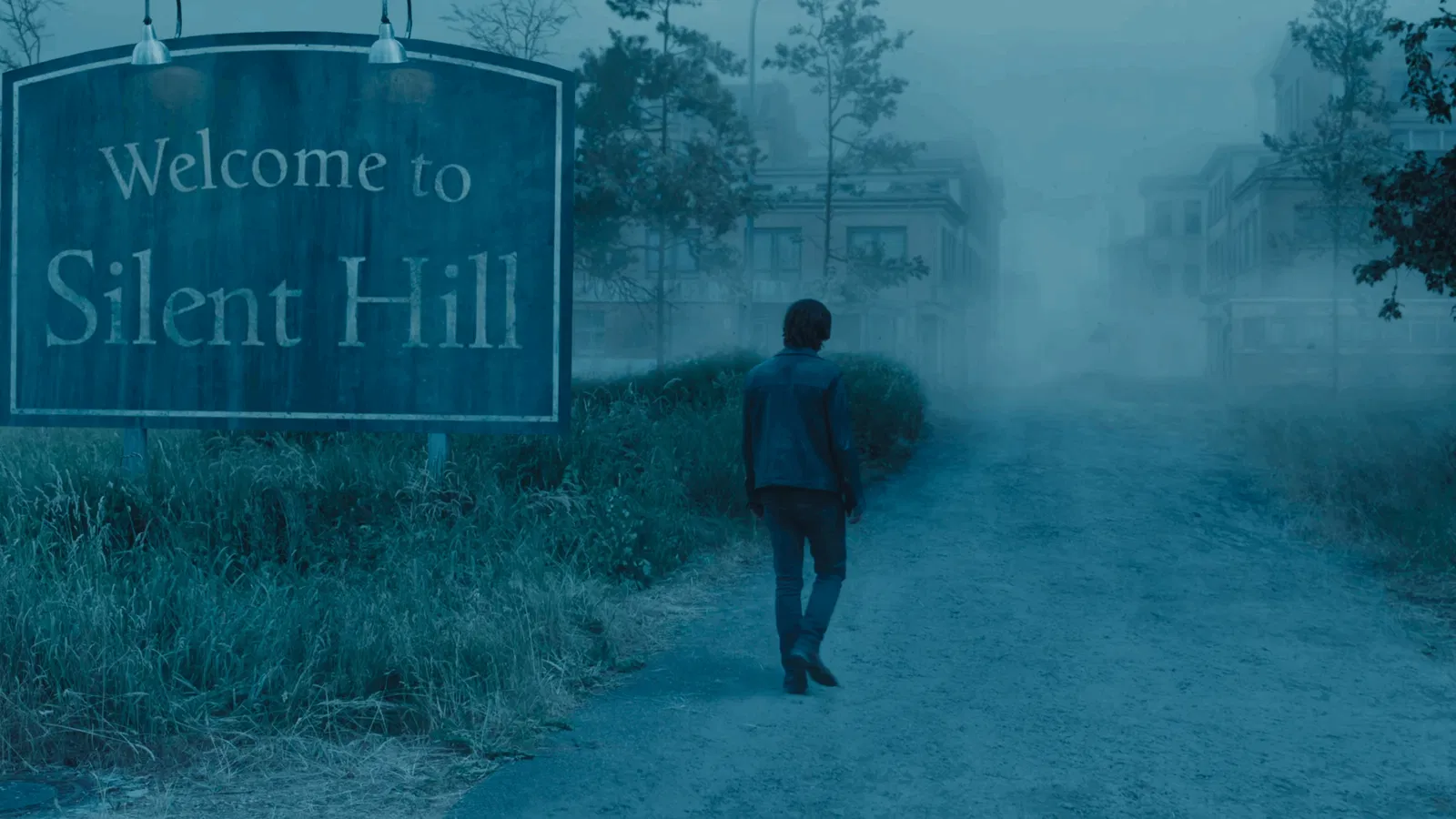
Director Christophe Gans’ return to the Silent Hill franchise is a pointed adaptation of Silent Hill 2, the most psychologically intricate entry in Konami’s survival-horror series. Jeremy Irvine (Baghead) plays James Sunderland, a hollowed-out man drawn back to the titular city after receiving a letter from his ex and true love, Mary (Hannah Emily Anderson, so great as the lead in What Keeps You Alive). But when he gets there he finds that Silent Hill is no longer a place so much as a state of mind – ash-choked, contaminated, and boarded up. James wanders abandoned streets, hospitals and hotels, pursued by manifestations of guilt and grief, including the fan-favorite Pyramid Head. The air periodically fills with the sounds of emergency sirens, and an FM radio he finds crackles any time a monster is near. He grabs the occasional snatch of conversation with his psychotherapist (Nicola Alexis) via cellphone. The sky intermittently turns blood red, while Sunderland looks confused. Anyone familiar with the game will recognise the imagery. Anyone unfamiliar may struggle to grasp why any of this is happening, or why it matters.
Gans directed the first adaptation in 2006, a film that has garnered a small degree of nostalgic goodwill over time. The studio’s strategy is clearly to bring back the original director, gesture at legitimacy, and cash in on fond memories. Profit! Or perhaps not. I never thought that first film was especially good, but it did have something this one doesn’t – it understood basic cinematic language. It had pacing and spatial coherence. Compared to this, it now looks almost competent.
This time around Gans seems to have mistaken fidelity for filmmaking. Return to Silent Hill is a pandering mess, structured like a video game in the worst possible way. It features a procession of encounters and fan-recognisable imagery with no sense of escalation or release. Blandly schematic action scenes are awkwardly held in place by flashbacks, voiceovers and exposition that clog the film and flatten any tension. It plays like Cutscene: The Movie, a joyless reel of stitched-together game cinematics mistaken for cinema.
Visually, the film is often astonishingly inert. Multiple scenes consist of a single human actor, usually Irvine’s James, cowering, gawping or scampering in the middle of a wholly or near-wholly generated CGI environment. At times he appears to be the only real thing on screen. Corridors, fog, buildings and monsters slide around him with no texture or weight. Horror depends on physicality, on friction between bodies and space. When everything surrounding the actor looks untouchable, fear evaporates. What remains feels unfinished, like a high-end pre-visualisation accidentally shipped to cinemas.
The deeper problem here is conceptual. Tropes and scare mechanics that function powerfully in a (somewhat) free-ranging, interactive game environment do not automatically work in film. In Silent Hill 2, dread is inseparable from agency. You choose where to go, when to linger, and what to avoid, and the fear comes from uncertainty and responsibility. In cinema, the viewer has no control. You are locked to the camera’s gaze, forced to look where the director points you, at the pace they dictate. The two media have fundamentally different requirements. Ignoring that fact does not produce a fan-faithful experience, it produces something dead on arrival.
Gans’ approach is both plodding and pandering, faithfully transcribing game logic without understanding its function. Scenes unfold as if waiting for player input, and near-escapes register as checkpoints rather than dramatic events. “Remember this bit?” the film seems to ask. Meanwhile, the depth of the narrative has mainly been stripped away, and what’s left of the psychological complexity that once animated the story lands as trite exposition. So much of the game’s narrative and emotional arc was powered by a sense of discovery. As a film, it falteringly trundles towards a crushingly predictable conclusion, like a locally-stopping train that you’ve boarded by mistake.
Gans has mentioned that he also drew on Hideo Kojima’s 2014 game P.T. for inspiration. That game, famously, was a ‘Playable Teaser’ for Kojima’s Silent Hills, his own take on the franchise that never materialised. But P.T. was suffused with quiet dread. This film has no dread – it is simply dreadful. It is curiously hollow, busy and yet utterly inert. Gans’ original Silent Hill film at least grasped that cinema demands shape and momentum. This one does not. It is not scary, not tense, not emotionally involving – just glum, synthetic and interminable. You would be much better off saving your money and watching a Silent Hill 2 speedrun video on YouTube. This is a return to Silent Hill that confirms one thing with absolute clarity: some places are better left unvisited.

Leave a Reply