
By Cullen Wade

GESTATION
When I wrote about Get Off My Lawn a few months ago, I remarked that it wouldn’t be the last time I’d be discussing the experiences of millennials without children in the horror films of 2025. For me, it was the standout feature of last year’s movies. In fact, it was two features: a double helix made of the two strands of fertility rhetoric surrounding my generation: the cult of compulsory childbirth, and the antinatalist abject. The former has the teeth of the state; the latter, its backlash, looks nastier on camera. Combine them, and you get the DNA of our collective nightmares.
As a voluntarily childless cis man born in 1985, married to a voluntarily childless cis woman born in 1996, I feel like I’ve been reading versions of the “millennials aren’t having kids” thinkpiece since most of us weren’t even out of our 20s. A look at the archives, though, yields a blurrier picture. Journalism on the topic from the early 2010s (like Ross Douthat’s New York Times editorial “More Babies, Please” from 2012, and the following year’s Time Magazine cover story “Having It All Without Having Children”) did not zero in on the millennial generation, since Gen-X’s balls were still tumbling around in the childbearing bingo cage. The earliest reporting specifically about millennial fertility was more nuanced. The Atlantic’s Elizabeth Gregory wrote a piece in 2013 called “A Childless Generation?” that urged caution about concluding that millennials were especially parenting-averse, citing the erasure of adoption and postponement in that analysis. A year later, The Guardian published an article by Jana Kasperkevic about how non-college-graduate millennials couldn’t wait to have babies.
It seems that “The Childless Millennial” became the dominant narrative around 2015, coalescing in an Atlantic article titled exactly that, written by Olga Khazan and published in April of that year. From that point, it didn’t matter whether the data bore it out, because the “fertility crisis” became a culture war issue in the era of reemergent fascism. Whipping up a moral panic around declining birthrates is an old favorite for the far right. Pronatalism can be a covertly (but just as often an overtly) xenophobic response to immigrant fertility. It’s a way of pushing back against women’s self-determination, and of delegitimizing gay marriage (even though the perception that same-sex couples are unlikely to parent has shaky foundations).
All of those tactics were on JD Vance’s mind in 2021 when he made his now-notorious “childless cat ladies” comment in an interview with Tucker Carlson. In phrasing that came uncomfortably close to neo-Nazi terrorist David Lane’s infamous fourteen words, Vance said, “The entire future of the Democrats is controlled by people without children … How does it make any sense that we’ve turned our country over to people who don’t really have a direct stake in it?” Beyond the intellectual dishonesty it takes to claim it’s impossible for non-parents to care about the future, it’s also evident that non-biological ways of being a parent did not enter into Vance’s calculations (Kamala Harris, one of the high-profile Democrats he named, is mother to two stepchildren), providing a window into what he thinks “having children” actually means.
Vance’s remarks, and the worldview they betray, became talking points in the 2024 U.S. election cycle. Even the nation’s most famous cat lady, the ordinarily apolitical Taylor Swift, entered the chat. In the following year, after Vance’s side scored what seemed like a decisive victory, when the dust settled, and Taylor switched to singing about tradwife mothering dreams on her latest album, it seemed like childlessness had once again been successfully demonized. As always, horror films were there to shove those demons back in our faces.
HEIRS THAT SCARE
None of these themes are new. But they seem to have reached a fever pitch in the horror movies of 2025. One of the year’s biggest horror hits, Weapons, approaches the topic from two different angles. It presents a worst-case result of bringing children into the chaotic, exploitative world we’ve created, while featuring a notably childless grade school teacher (Julia Garner) whom the community treats with suspicion. If she really cared about children, the townspeople implied, she would have some of her own. Her car is vandalized with the word “witch,” which resonates with the tradition of othering taboo-transgressing women and their animal familiars that underlies Vance’s “cat ladies” remark.
But Weapons was just the tip of the spear. We saw a few different manifestations of childless anxiety last year. There were films about breaking generational curses (Control Freak, The Monkey, Abraham’s Boys). A lot of films played on the media’s favorite explanation for the choice not to bear children: doubts about having the wherewithal to care for them (The Hand that Rocks the Cradle, Hallow Road, Frankenstein, Ick). A few asked the time-honored question, “What if my kid’s an asshole?” (Get Off My Lawn, Bloat). But the most striking run of 2025 movies was those that confront the fertility-obsessed right wing’s most direct strategy to combat the childlessness trend: snatching away reproductive rights. Since the summer of 2022, when the U.S. Supreme Court reversed the Roe v. Wade decision, thereby eliminating the constitutional right to abortion, we’ve seen a revival of horror films about coercive childbirth. 2024 gave us Apartment 7A and The First Omen, both movies by female writer-directors that drag dormant religious horror franchises screaming into the 21st century with plots about vulnerable women being forced to bear children against their will. But 2025 made the previous year look light, with Bring Her Back, Shelby Oaks, House on Eden, V/H/S/Halloween, and Match (the latter three by female filmmakers) all featuring variations on the same theme: using the body of a uterus-haver for a nonconsensual birth.

“YOUR BODY, MY CHOICE”
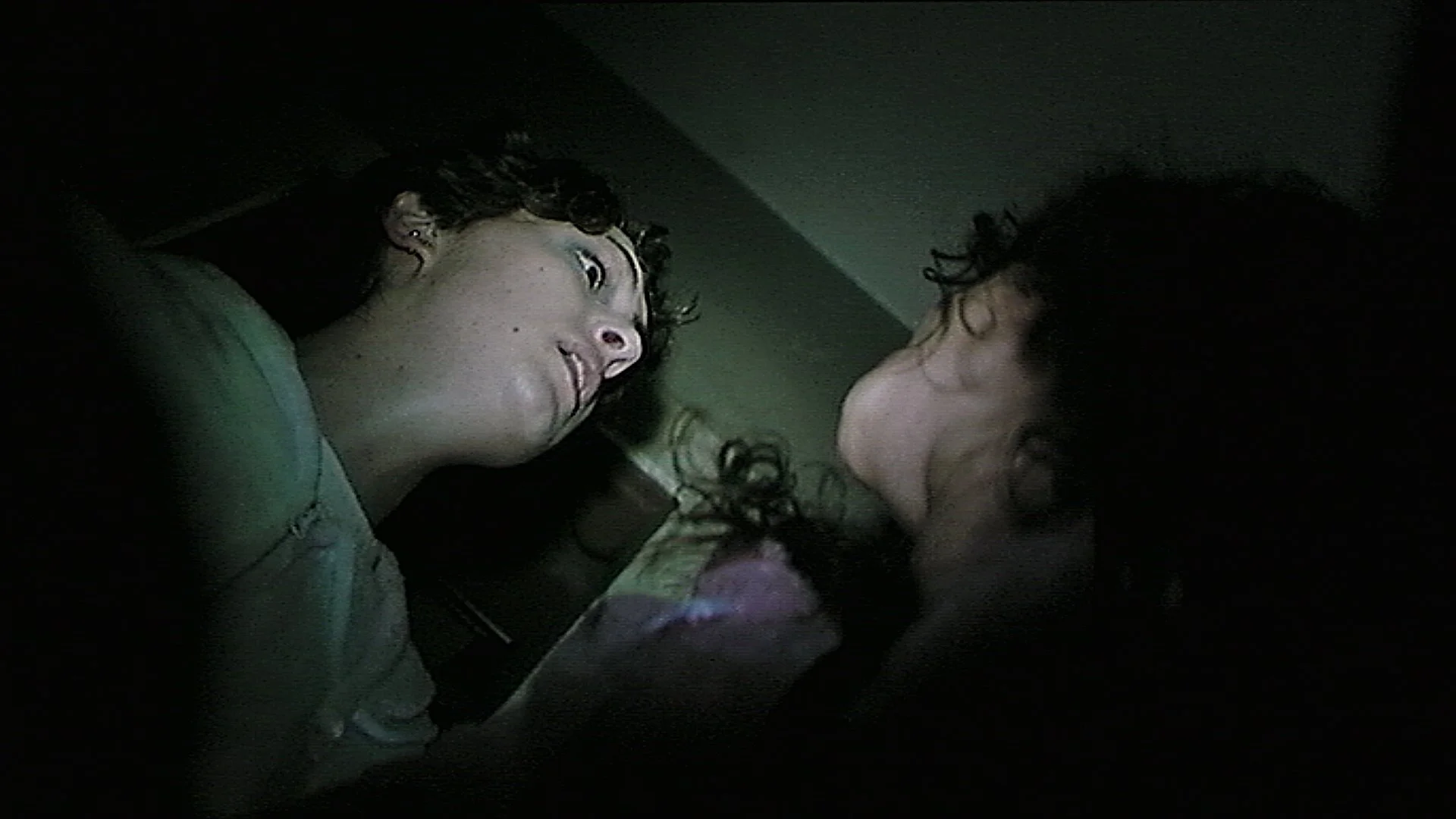
Shelby Oaks and House on Eden, both made by influencers-turned-directors, have strikingly similar stories. Both feature ghost-hunting YouTubers kidnapped at strange houses in the wilderness and forced to bear children for occult purposes. House on Eden’s protagonist, Kris (played by writer/director Kris Collins), is pregnant when the story begins, unlike Shelby Oaks’s Riley (Sarah Durn), who is forcibly inseminated by the movie’s boogeyman, but both pregnancies are exploited by older female figures with witchy objectives. In Shelby Oaks, that character is Norma (Robin Bartlett), mother of the film’s kidnapping rapist.
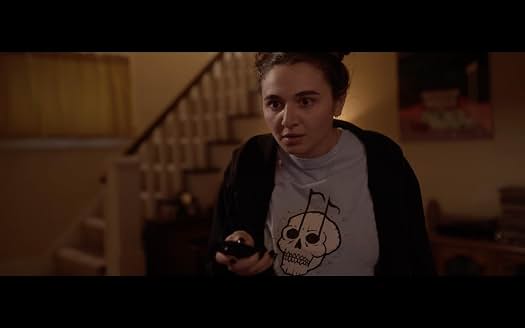
Dianne Simpson plays a similar character in Match, directed by Danishka Esterhazy. Simpson’s character, Lucille, wants a grandchild so badly that she catfishes young women on dating apps and lures them to her house to be impregnated by her physically and intellectually disabled son, Henry. Another wicked matriarch shows up in “Coochie Coochie Coo,” the V/H/S/Halloween segment written and directed by Anna Zlokovic. The twist is that, rather than being forced to bear children, the unlucky young protagonists of “Coochie Coochie Coo” (Samantha Cochran and Natalia Montgomery Fernandez) are forcibly infantilized. They are transformed into adult babies at the mercy of “The Mommy Witch,” who was impregnated by sexual assault and took her own life as a result. “He made me mommy,” a graffiti reads. What he made her, specifically, is an undead creature with animal-like rows of milk-spilling teats, who kidnaps young adults and turns them into her body-horror babies—so hollowed out by her exploitation that all she can do is reproduce that trauma. The segment is played as an EC Comics-like comeuppance for high school seniors who self-infantilize by wearing baby masks and trick-or-treating at too old an age, but the Mommy Witch herself is a reminder that patriarchy victimizes all women, even those who enlist as its foot soldiers.
Bring Her Back, like the other four, features a witchy mother figure with a scheme. This time, the grieving Laura (Sally Hawkins) is performing an occult ritual to revive the soul of her dead daughter in the body of an orphan (Sora Wong) in her care. Though the film is not about childbirth per se, it does hinge on a mother using the body of a vulnerable young woman, against her will, to bring a life into the world.
What do we make of all these female elders who exploit young women’s bodies? From the intentional non-parent’s point of view, they’re the mothers-in-law who drop “innocent” hints and collect baby clothes “just in case”; they’re the mom friends who talk about how cute it would be if you had kids to play with theirs; they’re the Swift-inspired homesteading grifters and maybe even Swift herself; above all, they’re Amy Coney Barrett, the Trump-appointed Supreme Court justice who sided with the boys on a decision that instantly imperiled life and liberty for millions of uterus-havers. Still, it’s worth noting that, although Weapons problematized the child-stealing witch notion, it then revealed an antagonist who was exactly that. All five films in this section have mother witches who lure young people to their houses and use the feminized domestic home as the primary site of terror. Horror in 2025 seemed content to deploy the witch archetype unreconstructedly. Maybe Wicked became such a mainstream phenomenon that the feminist reclamation of the witch no longer feels punk rock enough. Or maybe there’s another layer.
A BRIEF NOTE ON NUANCE
Before we go any further, an admission: if I, as a reader, were going to bail on an essay like this, it would be about midway through the next section, as soon as I got a whiff of “enlightened centrist” posturing. The fact is, so many hot-button issues that people claim are complicated, really aren’t. Palestine. Climate catastrophe. Abortion itself. The “it’s so complex, we’re so polarized, the truth is in the middle” handwaving around these issues is a cowardly concession to civility politics. It’s gotten so bad that when a topic comes up that truly deserves moderated consideration, like I believe this one does, it feels like The Boy Who Cried Nuance.
So lest you think I’m making a “both sides” argument, or appointing myself the tone police, I’ll stress that there is no equating a cohort systemically empowered to strip people of their rights with some sassy dog dads and their impolite name-calling. My project instead is to describe how both rhetorical streaks collide in our current slate of horror movies, and the tension that collision creates. I reserve the right to observe how the more extreme elements of childfree rhetoric combine with the stronger forces they’re pushing against to create the horror vocabulary of our moment. But I also reserve the right to call somebody’s bratty-ass kid a “fuck-trophy” if it pleases me to do so, because the fascists were always going to demonize us, whether or not we made it easy for them.

THE WRETCHED SPAWN
The cult of compulsory childbearing has a counterweight, and though not as systemically powerful, it’s a vital ingredient in 2025’s ghastly aesthetic. A stroll through the subreddit r/childfree will quickly introduce you to a strain of antinatalists who use terms straight out of the horror realm itself, like calling kids “crotch-goblins,” “hellspawn,” or “semen demons,” or referring to parents as “breeders.” Rather than just being annoyed by the microaggressions that come with non-parenting choices, some of these people feel truly persecuted. It’s this culture that weaponized the semantic distinction between “childless” and “childfree.” The idea is that “childless” denotes people who want to have children but have been unable to, while “childfree” people have made a permanent decision to forgo parenting. With all respect to those who feel empowered by the terminology, I’ve chosen not to observe that distinction in this essay. Thanks to the internet, “childfree,” which began as a reframing of non-parenthood as a liberty rather than a lack, has come to connote parenthood as a form of enslavement. Furthermore, the distinction creates more ambiguity than it solves. I don’t know where people who had children and lost them, or those who foster older children, or those for whom postponement melted into lifestyle, fit into that binary. Not to mention those for whom physical concerns and doubts about readiness were individual factors of equal weight that added up to something decisive.
My NightTide colleague Sharai Bohannon recently penned an excellent piece about Huesera: The Bone Woman that discussed natalist pressures in media. “Nothing about motherhood has ever appealed to me,” she writes, “even when I can appreciate my friends’ kids.” The fact that people like Sharai and me need to clarify that we like kids just fine, despite not wanting any of our own, signals that the conversation’s nuance has been steamrolled into a binary: you’re either in thrall to children, or you despise them. (I hasten to add that by comparing my experience to Sharai’s, I do not mean to equate them. I’m certain she, as an AFAB person, has to deal with all the bullshit way more than I do, and with deeper acculturated implications.)
A recent post on r/childfree, with the heading “Having a child when you have a genetic disability is morally wrong” netted 2,400 upvotes. A meme framing the reproductive body as damaged and unattractive, with the heading “Truth Hurts,” rode its 19,000 upvotes to silver medal position on the forum’s podium. The emerging childfree rhetoric is equal parts legitimate ideology, subversive provocation, and trauma response to the natalist all-or-nothing view of reproductive duty. (“You’re gonna keep assuming I hate kids? Fine then, I guess I hate kids.”) It leads to the gleeful exploding, incinerating, eviscerating, and flaying of young children we see later in V/H/S/Halloween, after the “Coochie Coochie Coo” segment establishes the birthing body as abject and disgusting. It also leads to the eugenic-coded horror in the prospect of Match’s disabled Henry perpetuating his genes, as if the kidnapping and sexual assault were not horrific enough on their own. Just because you recognize the evil of coercive childbirth doesn’t mean you get to decide, even rhetorically, who does and doesn’t deserve to procreate—especially when you target the already marginalized.
YOU’LL REGRET IT
One of the most common questions asked of the voluntarily childless is, “What if you change your mind and it’s too late?” Antinatalists ask an inversion of the same question: “What if you have kids and then realize you weren’t cut out for it?” Self-doubt about major life decisions is human, and when we project those doubts onto others, we get the aforementioned questions. When we instead internalize those doubts, we get art like Shelby Oaks. There’s a moment near the end of the film when Riley, despondent that she’s been forced to carry a demon child, tries to smother her baby with a pillow. Her sister Mia (Camille Sullivan) intervenes, and in the struggle, Riley falls to her death out of a window, literally expelled from the family home for the crime of being an unwilling mother. If we interpret the smothering not as literal murder, but as a symbolic rejection of motherhood‘s responsibility, we see that Riley has no real allies. Neither her rapist and his witch mother, nor her own sister respect Riley’s choices. It’s a tug of war that somehow loses the human at its center—the person with birthing potential who’s just trying to pay rent and navigate their life and body. In the hands of these (mostly female) filmmakers, the antinatalist abject is dark, disturbing, and necessary. Messy movies like Shelby Oaks, with its “don’t have the baby, but don’t abandon it,” or “Coochie Coochie Coo” with its “don’t grow up, but don’t stay young,” or Match with its “have compassion for the disabled man but also fear his virility” are paradoxical because they need to be. They are defining cinema for a cultural moment that folds reproductive bodies into the cradle of a slingshot, to be dragged back into an oppressive past and flung toward a hopeless future.

Cullen Wade (he/him) is a writer, horror critic, and high school teacher. He is the author of S(p)lasher Flicks: The Swimming Pool in Horror Cinema, out in 2025 from McFarland Publishing. His work has appeared at Horror Homeroom, HorrorGeekLife, Deaf Sparrow, and Spindle House Press. He lives in Charlottesville, VA, USA, with his wife Emma, cat Bishop, and rescue pit bulls Hazel and Libby. Follow him on Bluesky @cullenwade.bsky.social and Letterboxd @tobe_whooper.

Leave a Reply