
By Mo Moshaty

There’s apparently a correct way for a woman to tell you that something terrible is happening to her.
She should be upset, obviously, but just not too upset. She can cry, but she’s gotta remain coherent. Remember everything accurately, preferably chronologically. Don’t become angry when questioned. Don’t become frustrated when asked the same question again. Don’t have gaps in your memory. Don’t contradict yourself. Do not swear. Do not become defensive. Do not appear detached, because then you clearly aren’t distressed enough. Do not become hysterical, because then we have an entirely different problem, and for God’s sake, you better be able to prove it.
Women have been trying to satisfy this impossible fucking standard for centuries.
The word hysteria carries the evidence around in its own etymological baggage. Derived from the Greek hystera, meaning uterus, hysteria spent centuries entangled with ideas about female anatomy, sexuality, reproduction, and supposed emotional instability. Ancient medical traditions attributed symptoms to the movement of the uterus within the body, and by the 19th century, theories had shifted towards the nervous system, psychology, and eventually trauma and hysteria were recognized in men as well as women. How quaint. Yet its cultural association with femininity proved remarkably difficult to kill.
The diagnosis disappeared from the DSM (Diagnostic and Statistical Manual of Mental Disorders) as late as 1980. Folks, MTV aired in 1981.
The hysterical woman remains one of our most useful cultural inventions because she solves a particularly inconvenient problem: What do we do when a woman says something we do not want to hear?
We can listen to her, or we can decide something is wrong with her.

In Otto Preminger’s Bunny Lake is Missing (1965), he wastes very little time presenting us with that choice. Ann Lake, an American woman newly arrived in London, goes to collect her young daughter Bunny from nursery school and discovers that Bunny is gone. Worse, nobody seems to be able to confirm that money was ever there. Anne knows what happened that morning. She brought her daughter to school. She left Bunny in the first day room. She went about the ordinary business of moving into a new home. Then she returned and found her child missing. The police are summoned, questions are asked, rooms are searched, and almost imperceptible, the object of the investigation changes.
Where is Bunny? becomes: Was there ever a Bunny?
From that moment, it’s what is wrong with Ann? From here on out, Bunny Lake is Missing becomes incredibly vicious. Anne is consistently asked. To establish that she possesses the mental competence necessary for her missing daughter to be missing in the first place. Her motherhood requires corroboration. Her memory requires corroboration. Her fear requires corroboration. Her own account of her life requires corroboration. The absence of Bunny starts functioning as evidence against the woman insisting upon Bunny’s existence. And that’s a hell of a fucking trap. Because once the possibility of female instability enters the room, almost anything can feed it. Ann becomes desperate because nobody can find her child. That desperation makes her appear increasingly unstable, and her instability makes her testimony even easier to doubt. Being doubted makes her look more desperate. And around and around we go. See how easy that was?
Eventually, Ann finds something tangible, Bunny’s doll, an object capable of confirming that the child she remembers is more than a delusion. Her brother Steven destroys it and takes an unconscious Ann to a hospital, telling staff that she has been hallucinating about a daughter that does not exist. And it works because why wouldn’t it? He has given everyone a story they already know how to understand. There is no missing child, and Ann is simply crazy. Problem solved…but that’s not the truth at all.
There’s something too close to home about watching Bunny Lake is Missing sixty years later, because we have become considerably better at changing the vocabulary surrounding distressed women than abandoning our suspicion of them. Hysteria diagnosis may no longer be a thing, but we have found plenty of language to take its place. She’s emotional, confused, unstable, too anxious, traumatized, drunk, mistaken, overreacting. She misunderstood what happened. She can’t remember everything. She waited too long to say something. She seemed strangely calm for someone who claims to have experienced something terrible, or she is so visibly distressed that surely we can’t trust her recollection of events.
Pick one. There’s always something available to explain why the woman standing in front of us might not be the most reliable authority on what happened to her. The terminology has become more sophisticated, and our understanding of trauma has ostensibly improved. But the underlying expectation remains remarkably stubborn. If a woman wants to be believed, she better tell us what happened in a way that makes believing her easy.

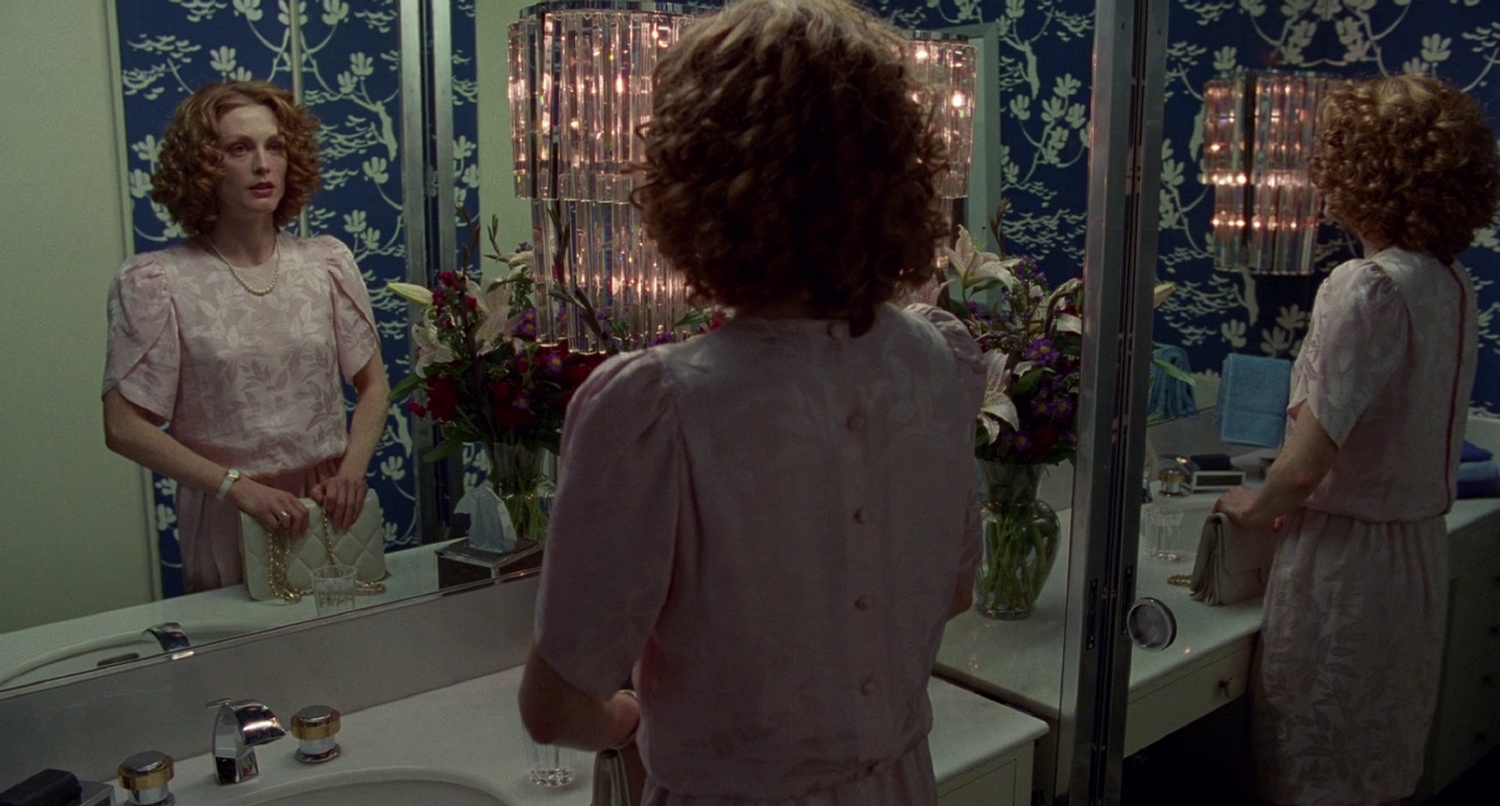
30 years later, Todd Haynes ‘ Safe (1995) begins with a woman who knows something is wrong with her body but can’t tell anyone what it is. Carole White coughs, her nose bleeds, she struggles to breathe and becomes increasingly exhausted. Her body begins reacting violently to spaces and substances she previously moved through without incident. She’s not withholding some crucial piece of information or refusing to acknowledge an obvious ’cause; she genuinely doesn’t know what’s happening to her. Which leaves her with an answer that becomes increasingly difficult for everyone around her to tolerate: something is wrong, and I don’t know why.
Carol does what we’re all told to do: when our bodies begin behaving in frightening ways, we go to the doctor. She submits herself to examinations and testing, searching for someone who can translate what she feels into something medically intelligible. When conventional medicine can’t provide a clear physical explanation for her symptoms, the absence of an answer begins to create its own set of possibilities. Perhaps the cause is psychological. Perhaps anxiety is involved. Perhaps the body is expressing something the mind cannot. Or maybe the problem is just fucking Carol.
There’s an arrogance in assuming that an unexplained experience is somehow less real than an explained one. Carol doesn’t know why she can’t breathe to know that she can’t breathe. She doesn’t need to identify what caused her nosebleed before noticing the blood. Yet suffering without a recognized cause is starting to make people uncomfortable because diagnosis offers more than the possibility of treatment. It gives suffering a name, boundaries, and a narrative. Without one, Carol is left with symptoms that refuse to explain themselves and a world that increasingly wants her to provide an explanation she just doesn’t have.

That tension becomes especially loaded when the patient is a woman. The cultural history of female illness is crowded with bodies whose unexplained symptoms have been filtered through assumptions about emotion, anxiety, pain tolerance, suggestibility, and psychological instability. The absence of a diagnosis doesn’t make the pain disappear, but it can definitely alter the way that pain is received. A woman describing what is happening inside her own body quickly finds herself occupying that strange area of being both the person with the most intimate knowledge of the experience and the person whose interpretation of that experience carries the least authority.
Haynes doesn’t let Carol get rescued from this uncertainty by revealing a convenient culprit. There’s no final test result, environmental contaminant, or triumphant Erin Brockovich-defended diagnosis that allows her to turn toward everyone who doubted her and say, “See, I told you so!” Safe protects its ambiguity, and that ambiguity is exactly what makes Carol so useful in this theme. If our willingness to take someone seriously depends entirely upon whether the events prove them correct, we have not learned to believe people. We have learned to wait for proof.
Carol eventually finds Wrenwood, a community that explains the environmental illness she believes she is experiencing. There’s an immediate seduction in finally encountering people who possess language for something that has resisted explanation. But the film is far too suspicious of certainty to let recognition become uncomplicated salvation. Wrenwood’s philosophy turns the responsibility inward, trying to tie recovery to self-love, personal responsibility, and emotional transformation. I feel a “grow from love” coming on.
Carol finally reaches a place where people accept that she is sick, only to encounter different people making her feel responsible for the suffering that’s happening to her.
This is where belief itself becomes more complicated. Taking a woman seriously doesn’t mean unquestioningly accepting every explanation offered for what she experiences. Just as uncertainty about a cause doesn’t justify dismissing the experience altogether. It should be entirely possible to tell someone, “I believe that you’re experiencing this, and I do not yet understand why.” Those two thoughts can coexist.


So.
Different women. Different threats. Different decades. Same question. Why should we believe her?
We should start by asking why disbelief has been our default. Because the history of the hysterical woman isn’t just the woman, isn’t just the history of women behaving irrationally in fiction. It’s the history of deciding that female distress itself can discredit female testimony. Once a woman becomes sufficiently frightened, angry, confused, obsessive, traumatized, or even inconvenient, attention can move away from what she’s saying toward the way she’s saying it. And that, my friends, has become a remarkably useful trick.
If a woman says something terrible has happened and remains composed or unbothered, she can seem too cold. If she falls apart, she can seem too unstable. If she remembers everything, her account can sound rehearsed. If trauma fractures her memory, inconsistency now becomes suspicious. If she immediately reports harm, questions follow about motive. If she waits, the delay itself becomes evidence against her. That all-familiar question: why are you coming forward… now?
So what exactly is the acceptable amount of devastation?
That’s where Bunny Lake is Missing and Safe become uncomfortable companions. Both ask who possesses the authority to determine what counts as truth in the first place. Ann knows her daughter exists, Carol knows her body is suffering, and everyone else would just like some paperwork. And the horror of these films is that sometimes proof arrives after the point at which believing someone could have protected them.
The frightened woman has consequently become one of horror’s favorite punching bags. She runs into the room, already knowing what everyone else will discover forty minutes later: something happened. Someone is dangerous. Her body isn’t right. Her child is gone. There’s something inside the house. But first, inevitably, Miss Ma’am, are you quite sure?
We know this scene so well because we haven’t exactly stopped staging it outside the cinema.
Calm down.
You’re getting hysterical.
And perhaps the most frightening thing about that sentence isn’t how old it is, but how current it sounds.

Mo Moshaty is an acclaimed horror writer, lecturer, and producer whose work combines visceral storytelling with the psychological insight of her Cognitive Behavioral Therapy background. She has lectured internationally, including as a keynote speaker at Nightmares from Monkeypaw: A Jordan Peele Symposium (Prairie View A&M), No Return: A Yellowjackets Symposium (Horror Studies BAFSS Sig), The Whole Damn Swarm: Celebrating 30 Years of Candyman (University of California), and with the Centre for the History of the Gothic (University of Sheffield). Mo has also presented at the BFI, Miskatonic Institute of Horror Studies, and Final Girls Berlin Film Festival’s Brain Binge on women’s trauma in horror cinema, Cine-Excess on The Creepy Kid Horror Subgenre and Mother/Daughter Trauma in Horror, and Romancing the Gothic on Cosmic Horror’s Havoc on The Body Electric Her short film, 13 Minutes of Horror: Sci-Fi Horror, won the 2022 Rondo Hatton Classic Horror Award for Best Short Film. As a core producer with Nyx Horror Collective, Mo co-created the 13 Minutes of Horror Film Fest and partnered with Shudder in 2021 and 2022, while also establishing a Stowe Story Labs fellowship supporting women creatives over 40+ in horror. A member of the Black Women in Horror Class of 2023 and featured in 160 Black Women in Horror, Mo’s short fiction appears in A Quaint and Curious Volume of Gothic Tales (Brigid’s Gate Press) and 206 Word Stories (Bag O’ Bones Press). Her debut novella, Love the Sinner, was released July 5, 2024, with Clairviolence: Tales of Tarot and Torment released in October 2025. The first of her five-volume non-fiction series, The Annex of the Obscure: The Afterlife, will be released in 2027 from Tenebrous Press. As the Editor-in-Chief of NightTide Magazine and founder of Mourning Manor Media, Mo champions marginalized voices in horror. Under her leadership, NightTide plans to launch a film festival in 2028, furthering her mission to reshape the genre through inclusivity and representation.



Leave a Reply