
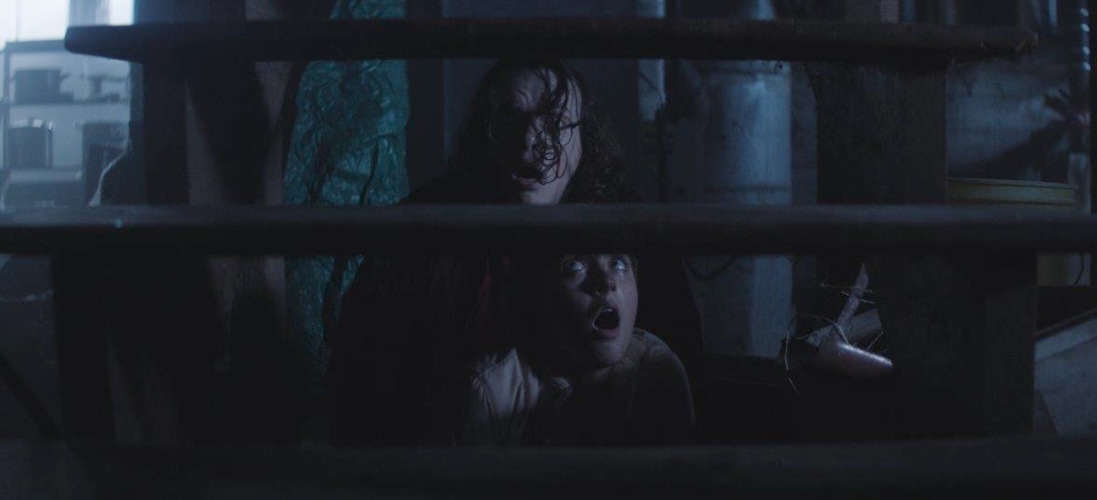
Test Screening (2024) ⭐️⭐️⭐
Follows four teens who find out that a test screening is coming to their little cinema, but the film is actually a mind-control experiment that has terrifying effects.

1982 was a rich year for horror cinema. The Thing. Poltergeist. Creepshow.
All the far-fetched frights our minds could barely comprehend. In the little town of New Hope, Oregon, the minds of it’s citizens are about witness just how far the mind, and body, can stretch.
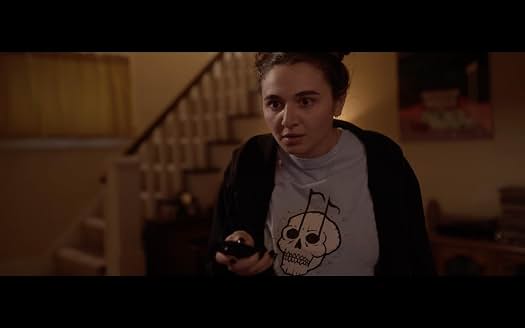
In any Nothing-Goes-On-Here town in the U.S., you’re going to have a few choice things: a general store, a roller-rink (for the kids) and a local cinema, the center of the universe to Reels (Drew Scheid), it’s resident projector operator and film buff. His encyclopedic knowledge of films, directors, and genres of cinema extends beyond the mainstream, setting him far apart from bored, bible-beaten teen Penny (Chloë Kerwin), her best friend and object of her crush Mia (Rain Spencer), and simple townsboy Simon (Johnny Berchtold), who’s mother is dying of cancer.
When the only access bridge to and from the town is blocked due to an unknown incident, events take a turn for the weird. A “focus group” is sending a Test Screening to New Hope for a classified film title. Reels, in all his excitement believes its a new Star Wars installment and coaxes all his friends to come. All are in attendance, save for Penny, whose father believes that films can be the Devil at work.
To Reel’s chagrin, the film isn’t Star Wars. It’s a mindbending visual virus that begins splitting the town into sociopaths and melded monsters. Reels and Penny are at the mercy of saving New Hope and it’s residents and hopefully make it out alive.
Sure, Test Screening draws inspiration from classics like The Thing and Invasion of the Body Snatchers, channeling the themes of paranoia and the unseen horror lurking within the uncanny. It stokes that era’s deep-seated anxiety about the post-70s expectation of conformity and loss of self, using New Hope as a battleground for freedom and manipulation to collide. It’s practical effects are a top-notch nod to evocative mind control and body horror, mirroring that decade’s best films.
Test Screening played at Fright Fest in August 2024

Mo Moshaty is an acclaimed horror writer, lecturer, and producer whose work combines visceral storytelling with the psychological insight of her Cognitive Behavioral Therapy background. She has lectured internationally, including as a keynote speaker at Nightmares from Monkeypaw: A Jordan Peele Symposium (Prairie View A&M), No Return: A Yellowjackets Symposium (Horror Studies BAFSS Sig), The Whole Damn Swarm: Celebrating 30 Years of Candyman (University of California), and with the Centre for the History of the Gothic (University of Sheffield). Mo has also presented at the BFI, Miskatonic Institute of Horror Studies, and Final Girls Berlin Film Festival’s Brain Binge on women’s trauma in horror cinema, Cine-Excess on The Creepy Kid Horror Subgenre and Mother/Daughter Trauma in Horror, and Romancing the Gothic on Cosmic Horror’s Havoc on The Body Electric Her short film, 13 Minutes of Horror: Sci-Fi Horror, won the 2022 Rondo Hatton Classic Horror Award for Best Short Film. As a core producer with Nyx Horror Collective, Mo co-created the 13 Minutes of Horror Film Fest and partnered with Shudder in 2021 and 2022, while also establishing a Stowe Story Labs fellowship supporting women creatives over 40+ in horror. A member of the Black Women in Horror Class of 2023 and featured in 160 Black Women in Horror, Mo’s short fiction appears in A Quaint and Curious Volume of Gothic Tales (Brigid’s Gate Press) and 206 Word Stories (Bag O’ Bones Press). Her debut novella, Love the Sinner, was released July 5, 2024, with Clairviolence: Tales of Tarot and Torment released in October 2025. The first of her five-volume non-fiction series, The Annex of the Obscure: The Afterlife, will be released in 2027 from Tenebrous Press. As the Editor-in-Chief of NightTide Magazine and founder of Mourning Manor Media, Mo champions marginalized voices in horror. Under her leadership, NightTide plans to launch a film festival in 2028, furthering her mission to reshape the genre through inclusivity and representation.


Leave a Reply