
By Sharai Bohannon
I love telling the story of how I became a film critic out of spite. I didn’t like the way Black horror films were treated on Rotten Tomatoes. So, I did what I do best and started stating the obvious on my first horror podcast and found a community of people who also know bias plays a huge part in that. The next thing you know, I was dusting off my first degree, evaluating scripts to the tune of various outlets’ style guides, and was a bona fide freelancer. I clearly skipped some important steps for brevity (like the era I was a theatre and TV critic), but that’s pretty much it. I’m telling you this because I don’t think that much has really changed since I started working the horror beat exclusively in 2020. We still need more intersectional criticism, and we are still watching icons leave this mortal coil without getting their flowers due to some isms and phobias.
The power of spite compelled me to apply to Rotten Tomatoes, and I got in. I’m certain that I mentioned in my application that I was doing it because films like Tales from the Hood were listed as rotten. You can say what you need to about the sequels, but Rusty Cundieff made something so important and (sadly) still timely with that first installment. It’s frankly criminal to say it’s unwatchable, so it says more about the critics than the film. Same with Ernest R. Dickerson’s horror movies because both Tales From the Crypt Presents Demon Knight and Bones are masterpieces. I have been to at least two screenings of the former and watched Dickerson pick up well-deserved awards. It turns out Overlook Film Festival and Brooklyn Horror Film Festival understood in 2025 that the man is a visionary. Something that still eludes too many critics with Rotten Tomatoes accounts.

I’ve had the honor of being on a Clubhouse call with Cundieff and had the privilege of meeting Dickerson a few times (including once where he blessed my podcast Blerdy Massacre with some knowledge). So, I feel comfortable saying that they both seem to have moved on from their work being discarded by critics who don’t know how to engage with Black art. However, I am petty enough for all of us and will continue judging people who “haven’t made time to watch” or critics who hate these iconic movies. While they both seem to be thriving and getting their flowers later in life, I cannot help but wonder what things would have looked like if criticism weren’t such a cis-white guy-filled pool of haters.
This still happens because the full-length version of Mr. Crocket dropped in 2024, and most of the critics who didn’t understand it were white. A movie with a similar aesthetic and story is coming out soon and doesn’t seem to have Black and Brown leads or a Black filmmaker pushing it uphill. So, I’m curious to see how this does on Rotten Tomatoes. I would love to be surprised, but this is not my first year on this floating rock that continues to bring me disappointment after disappointment. The same system that refuses to make space for Black horror legends doesn’t want to open any seats at the table for new Black filmmakers today. It must be Tuesday. These slights and oversights have become expected, and we have had to learn to laugh at them to keep from crying. However, that doesn’t make it okay that Black artistry remains undervalued. Legends are disrespected, if not completely erased, simply because of unchecked biases.
I think about how the late Tony Todd gave almost 40 years of gravitas while elevating each role he landed. Then I remember that the 77th Primetime Emmy Awards and 97th Academy Awards forgot him when putting together their “In Memoriam” sections. I think about how many of the cast and crew of Abby didn’t live long enough to see people discover the movie after Warner Brothers snuffed them out. They’ll never know how many of us have watched the grainy uploads on Plex and YouTube because it hasn’t gotten the restoration it deserves. Did anyone ever tell Carol Speed that her performance in the film was fantastic and should’ve led to more leading horror roles? This, of course, makes me think of how Marlene Clark was treated and eventually had to give up on her dream. I feel bad for her and for all of us who were robbed of what should have been a long career of outstanding performances.

Do you know how criminal it is that I only learned about William Marshall’s contributions to Blaxploitation horror because of Horror Noire: A History of Black Horror? How old were you when you discovered that Bolaji Badejo was integral to Alien, as he was the one in the costume? We discuss creature performances all the time, but that name somehow rarely comes up, even though the franchise refuses to die. Speaking of franchises that were quietly built on Black actors who deserved more recognition, Kevin Peter Hall is also owed so many more belated flowers for being in the costume and kicking off the Predator franchise.
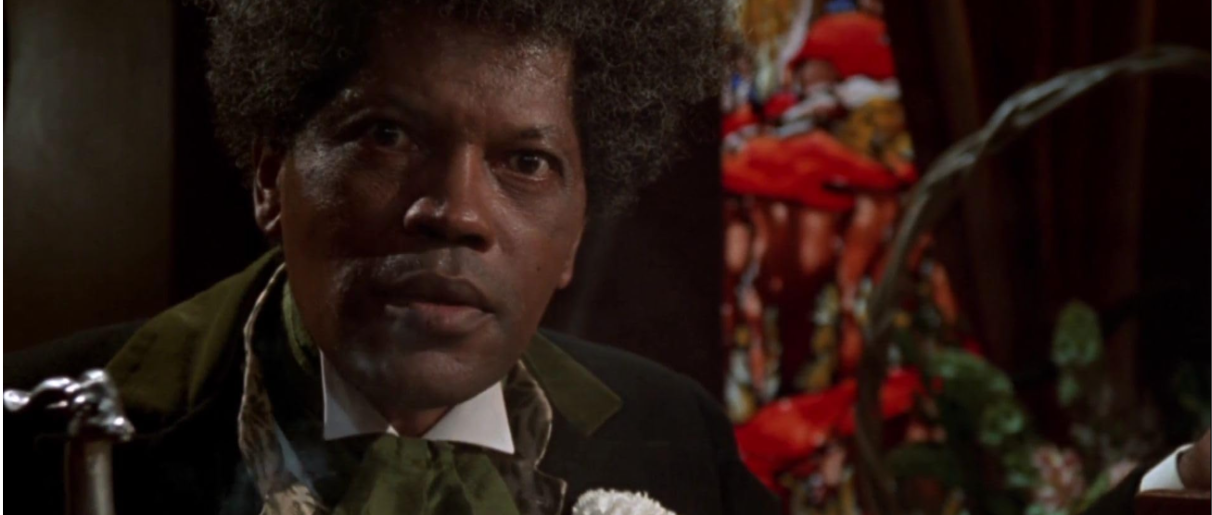
To circle back to Cundieff’s Tales from the Hood for a moment, too many of those Black actors passed away without nearly enough acclaim. Ricky Harris, Lamont Bentley, and the legendary Rosalind Cash come to mind. I am upset that Clarence Williams III gave an outstanding and quotable performance as Mr. Simms that too many people haven’t gotten around to seeing. As a kid, it was the closest thing we had to a Black Doctor Who, and it is possibly one of the best performances of 1995. Williams worked for decades in film and TV, but where are his awards? How often does his name come up outside of conversations about Black actors who deserved more respect?
As usual, I don’t have quick fixes for the lack of spaces that value Black excellence. I wish I did because I could hang up my podcast mic, close my computer, and maybe try being less spiteful. However, this issue has been nagging at me more than usual lately. I hosted a virtual watch party the other day, and Pam Grier’s filmography came up. Luckily, everyone on the call knew that Grier is a living legend and an integral part of Black cinema. However, the industry doesn’t seem to want to give her anything to work with lately. We have a Black icon who should have her pick of roles, but she’s now usually tossed into the same pool all Black actresses over 35 are tossed into. Bryian Keith Montgomery Jr.’s 2023 film Cinnamon allowed her to be a threat and is one of the reasons I tell people to check it out.

I complain a lot about how being Black famous is sometimes code for critical biases, cutting projects off before they begin. It’s usually a sign that white critics refused to try it because it seemed too Black. Like that loud portion of the internet that understands Jordan Peele’s genius when they watch Get Out. However, those same souls are confused by Us and deny that Nope is a horror movie. That is very telling. The fact that Ryan Coogler has been elevating cinema his entire career, but too many people only clocked in for Sinners because it became mainstream, is also worthy of bombastic side-eye. Black excellence continues to suffer because society refuses to address its biases and do better. The incessant need to double down when asked to do better is actively preventing alleged cinephiles from experiencing art made by people who don’t look like them. People who don’t come from their zip codes and have things to actually say.
How can you claim to love films but refuse to see movies that do what they are supposed to do? After all, shouldn’t the media we consume challenge us and reflect the world we live in? It cannot do that if people refuse to engage with the artists who fight their way through the broken industry to only be ignored. You cannot claim you want these stories if you refuse to watch them. We’re living in a month where Aleshea Harris‘ Is God Is and Boots Riley‘s I Love Boosters are in theaters. Do you know where the supposed allies are who have the time and ability to see both? Have they seen either film? Or are they simply making performative posts online about wanting Black stories? Because asking for more doesn’t do anything if you refuse to open your wallet and actually engage with the art. No one can pay their rent with skeets and hashtags. That also doesn’t help open doors for the Black filmmakers trying to get through the door behind them.

Sharai is a writer, horror podcaster, freelancer, and recovering theatre kid. She is the host of the podcast A Nightmare On Fierce Street and is also one-half of Blerdy Massacre. She has bylines at Fangoria, HorrorBuzz, Neon Splatter, and is Co-EIC of Horror Movie Blog. She spends way too much time with her TV while failing to escape the Midwest.

Leave a Reply