
By Sharai Bohannon

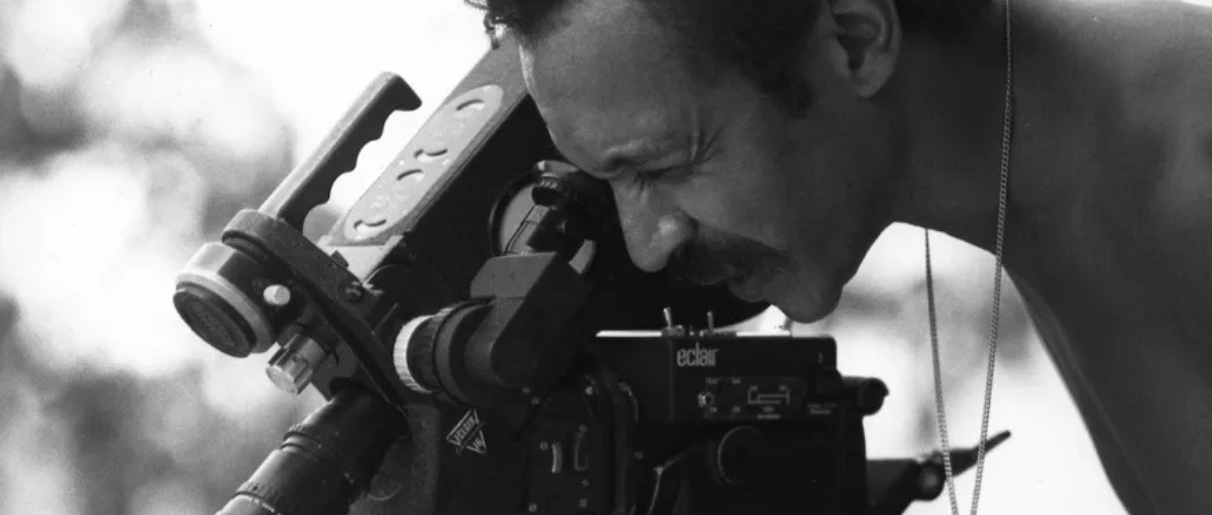
As any Blerd can tell you, representation matters. It’s why we spend so much time searching for people who look like us in the spaces we choose to inhabit. Or in the media we consume as kids, or whatever areas we decide to pursue as careers, etc. We find ourselves in too many predominantly white spaces, but always know someone(s) had to come before us. I know I spent so much of my “downtime” while pursuing two different theatre degrees, looking for Black playwrights between assignments, life events, work, etc. There were too few people of color, specifically Black people, in the theatre canon for my liking. I knew I had to fix that problem for myself because the curriculum wasn’t going to do it for any of us. I felt it was crucial for me, a Black woman going into debt and taking microaggressions to the face every day, to see that other Black people made it. To see that there might be room for me somewhere on the other side of grad school. That was the same energy I stepped into the horror podcast arena with, and that is how I stumbled upon Bill Gunn.
As the self-proclaimed Intersectional Horror Lady, all of my podcasts are coming at the genre from lenses that are often overlooked. So, when A Nightmare on Fierce Street wanted to celebrate queer horror filmmakers, I knew this would require legwork. After all, in the early 2020s, most of us couldn’t name one queer horror filmmaker of color because they don’t get support and never become mainstream due to bias. So, I gave up a couple of days and hit the internet streets, eventually uncovering Bill Gunn. Gunn has stayed on my mind ever since because he is another overlooked Black man who forged his way in an industry that would never celebrate him. He’s best known to horror fans for writing and directing Ganja & Hess. However, Gunn had so much to offer both theatre and film, in an industry that wouldn’t make room for him.
William Harrison Gunn was born on July 15, 1934, in Philadelphia, Pennsylvania. His dad, songwriter and poet William Harrison, Sr., and mom, actress and director of a local theatre company, Louise Alexander Gunn, raised him in the area. After dropping out of high school and serving in the Navy, Gunn returned to Philly and worked as a painter for Neighborhood Playhouse. He was eventually cast as an extra in their production of Street Scene. After that, he moved to New York, where he made his Broadway debut in The Immoralist in 1954. He worked pretty steadily as an actor, mostly on stage, for years. Then in 1959, his first play, Marcus in the High Grass, was produced at the Theater Guild in New York. (The New York Public Library Archives & Manuscripts)


I’m writing about Bill Gunn because he is a queer Black filmmaker and playwright who I don’t think gets enough flowers. However, I want to make sure to stress that he was more than that. He was an actor and activist whose pen seemingly never stopped moving, no matter how many doors were slammed in his face. His artistry, legacy, and importance to the lexicon are, however, usually overlooked. If you don’t happen to talk to the right person or catch the Shudder documentary, you might never know he was a gifted Black man working in an era that made it nearly impossible for anyone who shared any of his identities to work. Much like his collaborator, Marlene Clark, he showed up with a singular energy in an industry that made it difficult for him to share it. While we benefit from the fruits of their collaboration on Ganja & Hess, Gunn’s film Stop! was unreleased.
Stop! also starred Marlene Clark and seems like another arthouse movie going against the grain of its time. It was to be Bill Gunn’s directorial debut and made him the second Black filmmaker to direct for a major studio. (Bill Gunn: An Unsung Hero of Black Filmmaking by Candice Frederick) The buried film was about a couple who become swingers and enter into a sexual relationship with another couple. The film had so much beloved talent attached both in front of and behind the camera. However, Warner Brothers did everything they could to ensure it never saw the light of day after it was rated X. (The Bedlam Files) While not a horror movie, it’s another reminder that Gunn was intent on telling stories that didn’t shy away from desire, queerness, and all of the other words deemed taboo at the time. As far as I can tell, Ganja & Hess is Gunn’s only writing credit in the horror sphere. I’m not here to argue and pretend it isn’t. However, I wonder if we would have gotten more genre fare from him if the system hadn’t been broken. I’m here wondering if we could have had more nice things if queer Black voices were actually valued.
Bill Gunn was very aware of the way critics treated his art compared to his white counterparts. In a letter to the New York Times, he wrote, “If I were white, I would probably be called ‘fresh and different.” If I were European, “Ganja and Hess” might be “that little film you must see.” Because I am black, I do not even deserve the pride that one American feels for another when he discovers that a fellow countryman’s film has been selected as the only American film to be shown during “Critics’ Week” at the Cannes Film Festival, May 1973. Not one white critic from any of the major newspapers even mentioned it.” (New York Times Archive)
All of these decades later, and Gunn’s sentiment is still sadly too accurate. Even while comparing the bits and parts of his biography from a handful of online sources, it’s hard to ignore the bias he called out in his letter to the New York Times. That frustration is palpable and justified. He wrote novels, plays, and screenplays while pushing forward as an actor and indie director. However, he wasn’t taught in either of the schools from which I received a theatre degree. Many of my horror podcast peers discovered his all-but-forgotten legacy around the same time I did. That seems unfair for such a prolific writer who had so much to give this world.


Making art is an act of resistance, whether or not the artist is aware of it. According to Sam Waymon, Gunn’s frequent collaborator with whom he shared an artistic home, Gunn was very aware of it when they worked on Ganja & Hess. Waymon told Screen Slate, “The driving force behind the collaboration of making Ganja & Hess was independence.” Waymon elaborated, “We’re going to follow our hearts. We’re going to follow our dream. We’re going to follow our artistic destinies. We were going to make a film that people of color, Black folks at that time, would not have this opportunity to do again, even though the producers wanted a Black exploitation film. Obviously, we didn’t make that.”
As most genre fans can attest, the film stands out in an era where Black stereotypes were rampant. The delicate, romantic, and emotional journey of Ganja (Clark) and Dr. Hess (Duane Jones) isn’t the thing most studios were greenlighting at the time. A film treating Black characters with care and becoming a prime example of Black artistry was too ahead of its time. Which is exactly why it was necessary to make it at all costs.
“We said okay, we only have $350,000. So Bill said, ‘No, wait a moment, let’s do our thing.’ We knew that was completely contrary to what was popular out there in the theaters. We knew Hollywood would probably not like it, but we didn’t give a hoot at all. We had to do what was right for us. And I think the way you can leave a legacy is to follow your own path. Follow your own Carpet Ride. Ganja & Hess was my first major score for a film, but the stylistic process was the same. It was emotional, sad, lonely, loving. It was sensual.” – Sam Waymon, Screen Slate.
I know it feels like I’m always about to throw a chair due to the lack of respect given to Black artists and their contributions to the media. However, Gunn’s Ganja & Hess was the first 70’s arthouse horror film I saw featuring Black folks. More importantly, this movie, made by a Black and queer filmmaker, still lives on in the DNA of films today. Yet, he’s not on most lists of game-changing directors. He’s not mentioned when discussing 1970s auteurs. Due to the lack of awareness about him as a person, he’s often left off lists celebrating filmmakers during Pride month. I can’t even blame most of the people making the lists because how are they to know a name that doesn’t get mentioned? Bill Gunn being queer and Black put him on the express lane to being almost erased. That’s an issue, an issue that filmmakers at any intersections that include Black and queer still encounter today.
As usual, I don’t have the magical answer to making more people “do better.” However, I think the least we can do is put more respect on Bill Gunn’s name. I feel like if we keep talking about unsung heroes who never got their flowers, it’s a way of keeping their memory alive. It’s a way of making sure anyone who cares has an easier time discovering their art than we did. More importantly, it also makes it easier for Blerds coming up after us to find some of the representation that we are all desperately seeking. While this isn’t the same as greenlighting his unrealized projects or giving him awards retroactively, it’s better than sitting around wishing someone would do anything. It also feels like a great way to funnel that rage about another Black artist being denied the accolades he deserved into something more useful.

Sharai is a writer, horror podcaster, freelancer, and recovering theatre kid. She is the host of the podcast A Nightmare On Fierce Street and is also one-half of Blerdy Massacre. She has bylines at Fangoria, HorrorBuzz, Neon Splatter, and is Co-EIC of Horror Movie Blog. She spends way too much time with her TV while failing to escape the Midwest.

Leave a Reply