
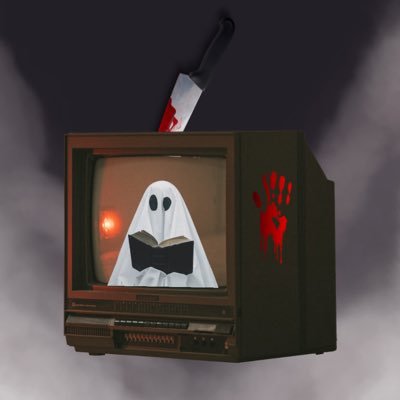
Welcome to NightTide’s Hear THIS, highlighting podcasts produced by marginalized creatives! Looking at the horror genre from an intersectional lens is the quest for the Unbound and Rewound Horror Podcast.
by Mo Moshaty

1. Give us your best elevator pitch on the theme of your podcast.
Whether that’s horror movies or horror fiction, I dive into any narrative looking for a mirror to hold up to society. The podcast motto is all about getting into the nitty gritty of it, because it’s always that deep.
2. What is one thing folks misconstrue about podcasting?
It’s true that “everyone has a podcast these days”. But I think people who say this overlook the way that podcasts unify people and offer safe spaces. There’s something therapeutic about being able to discuss your interests and building a community around it. For the horror community, there are so many different subgenres and niches that people tether too. I went from being someone looking for an intersectional, Gen-Z view on modern horror to being the host that offers it.
3. On podcasting in the horror genre specifically what roadblocks have you found?
One roadblock that comes to mind is the limited availability of certain films that I review or discuss on my podcast. Horror is a genre that is slowly becoming an appreciated genre in Hollywood. However, that appreciation isn’t translating when it comes to slating films in movies theaters. Most of these films are independent and following marginalized narratives.
4. What motivated you to choose this theme?
After I graduated college, I realized I had lost an outlet to discuss and study film. I looked for podcast that were hosted by Black people: particularly women. However, while I enjoyed the insight offered, I felt that no one I had discovered dug into horror the way I desired. I enjoyed the philosophy and psychology of it as much as the technique and contexts. It was important for me to include literature, because the horror genre began with books. It’s important to reflect on the differences in horror elements across mediums.
5. From a historically marginalized perspective horror has always been othered in the mainstream, what is it about the genre that gives you comfort, and/or inspires you?
It’s no coincidence that many queer, trans, Black and Brown people identify with the horror genre. It’s always offered a controlled and safe environment to feel angry with the problems in our society. For me, in particular, I’ve always been attracted to the truth disguised within horror. I remember the first horror movie I defended being Cabin in the Woods. It was the first movie, to my memory, that I understood as more than just a scary movie.
6. What do you feel is lacking in the genre today?
I think Black, queer horror is lacking. We’re getting more queer horror and more Black horror as companies like A24 and NEON take the reins in Hollywood. However, it’s the intersectionality that I wish we had more of.
7. What are three of your favorite films/TV in the genre and why?
SHOWTIME’s Yellowjackets, Julia DeCournau’s Raw (2016), and Black Christmas (1973) are my favorites to watch in the genre. They all offer something new to the genre that defies the common tropes and devices of horror. Well, I also just love queer horror, and I love Christmas horror.
8. What film is just “too much” for you and you regret seeing?
This may immediately be a red flag to some, and I get it. But hear me out. As someone who doesn’t watch horror for gore, Terrifier 2 was too much for me. I don’t regret seeing it, and I appreciate how Damien Leone is challenging the industry and Hollywood with his films. The bedroom scene just never stopped, and I wish it didn’t replay in my mind as often as it does. I will be seated for Old Saint Art in Terrifier 3, though. I have to support Christmas horror!
9. Where can we find your projects or passions outside of the podcast?
Outside of my podcast, you can find me on Substack where I discuss horror news, recent books/shows/movies, and discuss a different movie in my “It’s Not That Deep” section. You can also find me on TikTok, Instagram, and Twitter. No matter where you choose, it’s always @URHorrorPodcast with all of your horror needs.
Check out Avery on U&R’s Instagram!

Mo Moshaty is an acclaimed horror writer, lecturer, and producer whose work combines visceral storytelling with the psychological insight of her Cognitive Behavioral Therapy background. She has lectured internationally, including as a keynote speaker at Nightmares from Monkeypaw: A Jordan Peele Symposium (Prairie View A&M), No Return: A Yellowjackets Symposium (Horror Studies BAFSS Sig), The Whole Damn Swarm: Celebrating 30 Years of Candyman (University of California), and with the Centre for the History of the Gothic (University of Sheffield). Mo has also presented at the BFI, Miskatonic Institute of Horror Studies, and Final Girls Berlin Film Festival’s Brain Binge on women’s trauma in horror cinema, Cine-Excess on The Creepy Kid Horror Subgenre and Mother/Daughter Trauma in Horror, and Romancing the Gothic on Cosmic Horror’s Havoc on The Body Electric Her short film, 13 Minutes of Horror: Sci-Fi Horror, won the 2022 Rondo Hatton Classic Horror Award for Best Short Film. As a core producer with Nyx Horror Collective, Mo co-created the 13 Minutes of Horror Film Fest and partnered with Shudder in 2021 and 2022, while also establishing a Stowe Story Labs fellowship supporting women creatives over 40+ in horror. A member of the Black Women in Horror Class of 2023 and featured in 160 Black Women in Horror, Mo’s short fiction appears in A Quaint and Curious Volume of Gothic Tales (Brigid’s Gate Press) and 206 Word Stories (Bag O’ Bones Press). Her debut novella, Love the Sinner, was released July 5, 2024, with Clairviolence: Tales of Tarot and Torment released in October 2025. The first of her five-volume non-fiction series, The Annex of the Obscure: The Afterlife, will be released in 2027 from Tenebrous Press. As the Editor-in-Chief of NightTide Magazine and founder of Mourning Manor Media, Mo champions marginalized voices in horror. Under her leadership, NightTide plans to launch a film festival in 2028, furthering her mission to reshape the genre through inclusivity and representation.


Leave a Reply