
By Ava DeVries

Since its original serialization in 1898, Henry James’s gothic novella The Turn of the Screw has been the subject of extensive critical debate, particularly surrounding the reliability of its narrator. The story follows an unnamed young governess who believes the two children in her care, Miles and Flora, are being haunted, possessed, and corrupted by the ghosts of their previous governess, Miss Jessel, and their estranged uncle’s valet, Peter Quint. Readers can either adopt an “apparitionist” perspective and read The Turn of the Screw as simply a “soul-shuddering ghost story,” or a “nonapparitionist” perspective which reframes the story as a “psychological case study” of an unreliable narrator (Beidler 127, Cranfill and Clark 4). Personally, I find it more interesting to imagine that the governess made up or hallucinated the haunting. Still, many recent critics and readers—myself included—argue that “the story permits both readings simultaneously” and that its ambiguity is central to the narrative (Beidler 135-136).
Since this ambiguity is what has made The Turn of the Screw so prominent in literary conversations for over a century, any filmmaker who attempts to translate James’s story to the screen faces a challenge. Jack Clayton’s 1961 film The Innocents successfully sustains the potential unreliability of the governess’s character and, consequently, the ambiguity of James’s work; Mike Flanagan’s 2020 miniseries The Haunting of Bly Manor, however, takes a starkly different approach to the story and eliminates any suggestion that the ghosts may be a product of the governess’s imagination.
The narrational ambiguity of The Turn of the Screw
Narratologist Per Krogh Hansen argues that unreliable narrators can often be recognized by “intranarrational” clues, including “small interjections and comments” or “unresolved self-contradictions” that imply the narrator’s version of events may be inaccurate—for instance, a narrator who “continuously defends his sanity but does so with reference to situations and behavioral patterns that most definitely expose insanity” (241). A popular example is the narrator in Poe’s “The Tell-Tale Heart,” who denies his madness so adamantly that the reader is compelled to question his sanity.
These intranarrational cues are what make The Turn of the Screw so famously ambiguous. “I go on, I know, as if I were crazy; and it’s a wonder I’m not. What I’ve seen would have made you so, but it has only made me more lucid, made me get hold of still other things,” the governess tells the housekeeper, Mrs. Grose (James 52). Later, when the governess believes Mrs. Grose and Flora will be able to see the ghost of Miss Jessel, she writes that “[s]he was there, so I was justified; she was there, so I was neither cruel nor mad” (James 75). But Mrs. Grose can’t see the ghost, and Flora claims she can’t either, implying that the governess is indeed hallucinating.
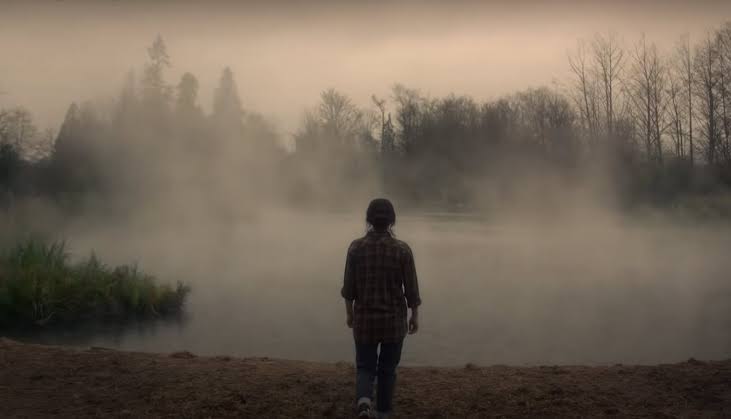
The governess’s story is also riddled with “signs of faltered memory and difficulty to put her experience into words” (Tredy). Details in her account demonstrate that she’s prone to memory lapses, especially in the moments after she claims to have seen one of the ghosts (Cranfill and Clark 53-54). After she first sees Quint on the tower, she experiences a “confusion of curiosity and dread” for an indeterminate length of time: “I only recall that when I re-entered the house, darkness had quite closed in. Agitation, in the interval, certainly had held me and driven me, for I must, in circling about the place, have walked three miles” (James 21). Later, after she tries and fails to get Mrs. Grose and Flora to see the ghost at the lake, she loses time again: “Of what first happened when I was left alone I had no subsequent memory […] I must have lain there long and cried and wailed, for when I raised my head the day was almost done” (James 77). These textual details aren’t enough to prove that the governess’s narrative is false, but they do allow for a skeptical reader to doubt her interpretation of events.
The governess isn’t the only narrator in The Turn of the Screw, however. The novella’s prologue acts as a frame story: another unnamed narrator recounts a Christmas party at which guests were gathered telling ghost stories (James 3-9). One man named Douglas tells the story of his sister’s old governess, who had died twenty years earlier but had given him a manuscript detailing her own supernatural encounters. The narrator, now, presents an “exact transcript” he made of the manuscript, which Douglas had given to him before his own death, years after the Christmas party. This prologue adds to the ambiguity of the story; while the governess’s narrative would be more unreliable on its own, Douglas acts as a “first-person ‘witness’” to her character (Recchia 30).
Adapting the unreliable narrator to film: The Innocents
If this ambiguity is a result of textual details and intranarrational cues in a first-person narrative, how can the same effect be achieved in film? Directed by Jack Clayton, The Innocents (1961) was the first feature-film adaptation of The Turn of the Screw (Tredy). Clayton “believed that James himself intended the narrative of The Turn of the Screw to be ambiguous” (Palmer 199). To write the screenplay, Clayton enlisted author Truman Capote, who also felt strongly about “preserv[ing] and even [enhancing] the inherent ambiguity of the original short story” (Tredy).

For their film to meet this standard, Clayton and Capote had to emulate the first-person point of view of the governess’s narrative. The governess (Deborah Kerr)—given the name Miss Giddens in the film—is “present in each scene of the film, never showing the spectator what the children, or the ghosts for that matter, were up to or what was ‘really’ happening” (Tredy). Unlike the original story, the film has no frame—there is no Douglas, no ghost stories told at a Christmas party. Because Miss Giddens is in every scene, every encounter with the ghosts can essentially be seen through her eyes; the film never confirms whether anyone else can see them.
Because the film isn’t actually narrated by Miss Giddens, signals of unreliability can’t come from her internal monologue. To make up for the lack of intranarrational cues, however, the film uses dialogue to imply that Miss Giddens might be seeing things. In a scene absent from the original story, Miss Giddens hears something outside Flora’s window:
Miss Giddens: “I’m sure something’s been hurt—an animal.”
Flora: “We must pretend we didn’t hear it. That’s what Mrs. Grose always says.”
Miss Giddens: “Pretend?”
Flora: “Then we won’t imagine things.”
Miss Giddens: “Well, sometimes one can’t help imagining things.”
This scene can be taken two different ways—it may foreshadow Miss Giddens imagining the ghosts, or, alternately, it may foreshadow the children lying and “pretending” that they don’t see the ghosts. In the end, “making a final judgment on the reliability of the governess and the reality of the ghosts is no easier in the film than it is in the novel” (Palmer 213).
An apparitionist adaptation: The Haunting of Bly Manor
Mike Flanagan’s nine-part miniseries The Haunting of Bly Manor (2020) takes a drastically different approach to adapting James’s story. The series establishes itself as an apparitionist retelling of The Turn of the Screw early on, and by the end of the series, there are essentially no questions surrounding the haunting left unanswered.
The main storyline of the series takes place in 1987, rather than the mid-nineteenth century. The governess (Victoria Pedretti), now named Dani Clayton, is an American expat who moves to England to escape her past. A closeted lesbian, she’s haunted by the memory of her late fiancé and childhood best friend, Edmund (Greg Sestero). Already, this is a more detailed backstory than James gives his governess. The ensemble cast features characters who were absent from or barely present in the original story: Mrs. Grose (T’Nia Miller) is in love with the manor’s cook, Owen (Rahul Kohli); the gardener, Jamie (Amelia Eve), becomes Dani’s romantic interest; even the children’s absent uncle, Henry (Henry Thomas), redeems himself in the end.

Perhaps the most striking deviation from the original story, however, is that the ghosts themselves have fully fleshed-out backstories. The affair between Rebecca Jessel (Tahirah Sharif) and Peter Quint (Oliver Jackson-Cohen) is shown through flashbacks, up to and after their deaths. Viewers witness Quint and Jessel dying and becoming ghosts—and they aren’t the only ones. Every person who dies at Bly Manor becomes a ghost, from the Victorian era to the present, and the series delves into most of their stories. In The Turn of the Screw, the deaths of Quint and Jessel remain shrouded in mystery; Mrs. Grose tells the governess that “Peter Quint was found, by a labourer going to early work, stone dead on the road from the village: a catastrophe explained—superficially at least—by a visible wound to the head” and that she does not know how Jessel died (James 31, 37). In Flanagan’s adaptation, however, both of their deaths are depicted on-screen—Quint is killed by one of the other ghosts, and he eventually possesses Jessel and drowns her so that they can be together again (“The Altar of the Dead,” “The Two Faces, Part Two”).
The ghosts in Bly Manor are undeniable, physical entities; they interact with the material world by touching, possessing, and even killing characters. Furthermore, unlike Miss Giddens in The Innocents, Dani is not present in every scene of Bly Manor. While it can be argued that Dani is unreliable, as she does experience hallucinations of her late fiancé (de Heer 43), the story of Bly Manor isn’t told solely from her point of view. The ghosts appear often when Dani is nowhere around, so they can’t be interpreted as a figment of her imagination. The ghosts are “unambiguously visualised for the audience to see, independent of a specific character’s perspective,” so the viewer “cannot doubt their existence” (de Heer 38).
Like the prologue in The Turn of the Screw, Bly Manor also has a frame story. The series opens in 2007, at a wedding rehearsal dinner. Afterwards, guests begin trading ghost stories, and one woman offers the story that makes up the plot of the show (“The Great Good Place”). This woman continues her third-person narration throughout the series, and the final episode reveals that the narrator is an older version of the gardener Jamie, and that the wedding she’s attending is Flora’s (“The Beast in the Jungle”). The crucial difference between the frame of The Turn of the Screw and the frame of Bly Manor is who narrates the ghost story. Douglas, though he was acquainted with the governess, didn’t witness the events that she relates in her manuscript; he has no way of knowing whether her narrative is true. Jamie, however, experienced the events at Bly Manor firsthand, which only solidifies the reality of the haunting that took place.
Why is Bly Manor so different from its source material? According to Flanagan himself, The Innocents was already “perfectly adapted” to The Turn of the Screw: “we saw little upside in trying to improve upon that adaptation. Our governess (whose name is an homage to Jack Clayton) will not follow in Deborah Kerr’s footsteps, not exactly…we wanted to make something at once old and new; reimagined and reverent” (qtd. in McCluskey). The series also incorporates nods to other stories by Henry James, such as “The Jolly Corner” and “The Romance of Certain Old Clothes,” and the title of each episode comes from one of his stories (McCluskey). While Flanagan’s Bly Manor is far from a faithful adaptation, it’s thorough in its mission to pay tribute to James and Clayton alike.
But a crucial element of their work that Flanagan ignores in his adaptation is how much the audience doesn’t know. Both The Turn of the Screw and The Innocents raise a series of questions that are never definitively answered: are the ghosts real or hallucinated? Is the governess the heroine of the story, or the villain? Are the children deceptive or truthful? These questions are what allow for such prolonged and layered debate among critics and readers alike. In Bly Manor, though, Flanagan answers each question explicitly. The ghosts are most certainly real, Dani is most certainly a tragic heroine, and the children are most certainly lying and in danger of corruption.

In comparing these two adaptations of The Turn of the Screw, it’s abundantly clear that the creators had different priorities. Clayton and Capote intended to faithfully adapt the ambiguity of The Turn of the Screw to the visual medium of film, while Mike Flanagan eschewed that ambiguity to essentially tell a new story inspired by James’s work.
The Innocents demonstrates how a potentially unreliable first-person narrator can be translated from a written work to a film. By having Miss Giddens present in every scene, the film can be viewed through her eyes, despite not having a concretely defined narrator. Hansen’s intranarrational signals of unreliability are replaced by dialogue that could hint at either Miss Giddens’s instability or the children’s deceit. As in the original story, the film never confirms whether any character besides Miss Giddens is able to see the ghosts, thus remaining perfectly ambiguous.
Conversely, The Haunting of Bly Manor leaves no question as to whether the ghosts are real. The ghosts and their backstories are depicted in great detail. Rather than being entirely centered around Dani, the series tells the interconnected stories of every character, both dead and alive. “The existence of Flanagan’s ghosts is no longer a matter of debate,” as Chantal de Heer writes, “because they are clearly shown on screen for the viewer to see without specific focalisation through one of the characters” (64). The ghosts make themselves known by possessing living characters and sometimes even physically moving, harming, or killing them. The frame story reinforces the lack of ambiguity, as it’s narrated by Jamie, the former gardener of Bly Manor and Dani’s partner. This may be a consequence of the nine-episode format, as opposed to a feature-length film; even if Flanagan had wanted to, it may have been an impossible task to depict the ghosts as possible figments of Dani’s imagination throughout the entire series. Instead, though, Flanagan explains every aspect of the story’s mystery ad nauseam—who each of the ghosts is, how they became ghosts, their motivations for possessing the children—leaving no room for interpretation.
Ambiguity is central to The Turn of the Screw; without it, most of the discourse and criticism surrounding the work wouldn’t exist. These two adaptations demonstrate that while it may be easier to create a sense of unreliable narration in a written text through first-person point of view, this subjective lens can certainly be translated to a visual medium—and that when it is not, the adaptation sacrifices some of the depth of the original work. An unfaithful adaptation isn’t an inherently poor one; Bly Manor is one of the most beautiful and tragic queer love stories in recent horror. However, by abandoning the question of the governess’s reliability, Flanagan’s series lacks the nuance and mystery that form the very basis of The Turn of the Screw. While well-thought-out worldbuilding and strong internal logic are important aspects of storytelling, the most memorable horror media leaves some of its scares up to the imagination. After all, what’s more terrifying than the unknown?
Works Cited
Beidler, Peter G. “A Critical History of The Turn of the Screw.” The Turn of the Screw: Complete, Authoritative Text with Biographical and Historical Contexts, Critical History, and Essays from Five Contemporary Critical Perspectives, by Henry James, edited by Peter G. Beidler, Bedford Books, 1995, pp. 127-151. Case Studies in Contemporary Criticism Series.
Cranfill, Thomas M., and Robert L. Clark. An Anatomy of the Turn of the Screw. Austin, University of Texas Press, 1965.
Hansen, Per Krogh. “Reconsidering the Unreliable Narrator.” Semiotica, vol. 165, no. 165, 2007, pp. 227–46, https://doi.org/10.1515/SEM.2007.041.
The Haunting of Bly Manor. Created by Mike Flanagan, Amblin Television, Intrepid Pictures, and Paramount Television Studios, 2020.
Heer, Chantal de. The Ambiguity of the Existence of Ghosts in the Haunting of Hill House, the Turn of the Screw, and Their Netflix Adaptations. 2021. Leiden University, MA thesis. Leiden University Student Repository, studenttheses.universiteitleiden.nl/handle/1887/3203351.
The Innocents. Directed by Jack Clayton, Achilles Film Productions and 20th Century Fox, 1961.
James, Henry. The Turn of the Screw: Authoritative Text, Contexts, Criticism. Edited by Jonathan Warren, 3rd ed., W. W. Norton & Company, 2021.
McCluskey, Megan. “How The Haunting of Bly Manor Puts a Bittersweet Twist on The Turn of the Screw.” Time, 9 Oct. 2020, time.com/5898095/haunting-of-bly-manor-turn-of-the-screw/.
Palmer, James W. “Cinematic Ambiguity: James’s ‘The Turn of the Screw’ and Clayton’s ‘The Innocents.’” Literature/Film Quarterly, vol. 5, no. 3, 1977, pp. 198–215. JSTOR, http://www.jstor.org/stable/43795561.
Recchia, Edward. “An Eye for An I: Adapting Henry James’s ‘The Turn of the Screw’ to the Screen.” Literature/Film Quarterly, vol. 15, no. 1, 1987, pp. 28–35. JSTOR, http://www.jstor.org/stable/43796289.
Tredy, Dennis. “Shadows of Shadows: Techniques of Ambiguity in Three Film Adaptations of ‘The Turn of the Screw’: Jack Clayton’s The Innocents (1961), Dan Curtis’s The Turn of the Screw (1974), and Antonio Aloy’s Presence of Mind (1999).” E-Rea : Revue d’études Anglophones, vol. 5, no. 5.1, 2007, https://doi.org/10.4000/erea.196.


Leave a Reply