
By Tugçe Kutlu

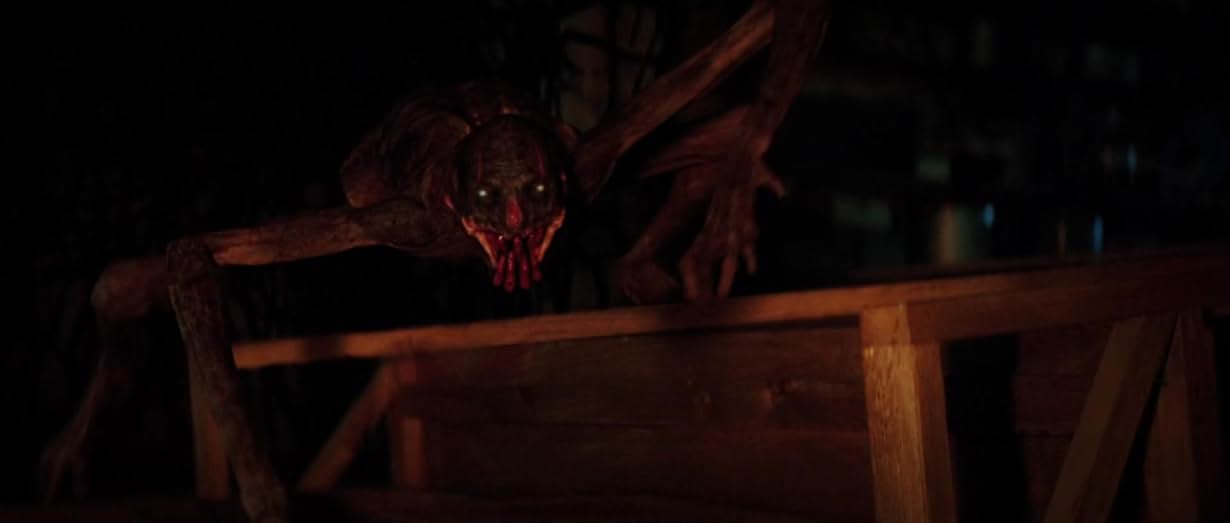
When The Boogeyman hit theaters in 2023, it quickly positioned itself as more than just another supernatural horror film. Directed by Rob Savage and adapted from a short story by Stephen King, the film reimagines the childhood fear of the monster in the closet through the very adult lens of grief. At its core, The Boogeyman is about what happens when sorrow is silenced—and what kind of monsters that silence can awaken.
The plot follows Sadie (Sophie Thatcher) and Sawyer (Vivien Lyra Blair), two sisters struggling to cope with the sudden death of their mother, while their father Will (Chris Messina), a therapist, remains emotionally unavailable. As the family fractures under the weight of unspoken pain, a malevolent entity invades their home. This shadowy presence—a literal Boogeyman—feeds on their grief, growing stronger the more it is ignored. The film doesn’t just use grief as a narrative device; it weaponizes it. Very much like Jennifer Kent’s The Babadook.
What sets The Boogeyman apart from others is its use of grief not only as an atmosphere but as an antagonist. Also, the fact that the father is a therapist himself. The creature functions as a metaphor for unresolved trauma: it lurks in closets and under beds, but it also lives in repressed emotions, things left unsaid, and therapy sessions that never happen. The more the characters deny their pain, the more power the entity gains.

This aligns closely with recent scholarship on grief horror. In a 2021 paper, Millar and Lee argue that horror films are particularly adept at depicting grief because monsters often represent the disruption caused by bereavement. “The disruptive effects of horror ‘monsters’ on protagonists mirror the core experience of disruption that accompanies bereavement,” 1they stated (Millar & Lee, 2021).
The Boogeyman also draws narrative parallels with other grief-driven horror films like The Babadook and Hereditary. These films show that when grief is left untreated, it can morph into something monstrous, affecting not just the individual, but entire families. In these new horror films, parents often become emotionally or physically absent, and children suffer the consequences—just as they do in The Boogeyman.
Another key strength of the film is how it externalizes internal struggle. The Boogeyman doesn’t just scare the characters—it forces them to confront their pain. And like many well-crafted horror metaphors, confrontation is the only way to banish it. Sadie’s emotional reckoning becomes the film’s emotional climax, illustrating the horror genre’s surprising capacity for catharsis.
In the end, The Boogeyman is a story about the price of silence in the face of grief. It warns us that pretending we’re “fine” won’t save us—that what we refuse to feel can, quite literally, destroy us. In a world still learning how to speak openly about trauma and mental health, this horror movie has something important to say.
Because sometimes, the scariest thing isn’t what’s in the closet—it’s what we keep locked away inside ourselves.

- Millar, B., & Lee, J. (2021). Horror Films and Grief. Emotion Review.
↩︎


Leave a Reply